


Saraki's new role at the Senate
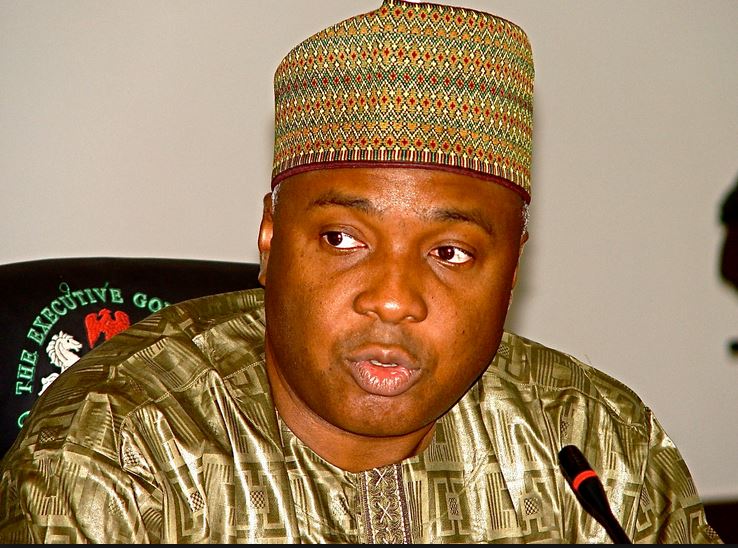
IF political careers were judged by years of service or number of positions held, then there would be no shortage of those with outstanding record of public service in Nigeria. If, however, they are judged by the significance of one’s political moments, then we would have to look harder to find those with truly remarkable records in public service.
Incidentally, one of those who have emerged as a member of this rare breed in the relatively short time he has served is the immediate past governor of Kwara State, now Senator Bukola Saraki. I must confess that at the time he first contested, I was more struck by the audacity of his candidacy, given the obvious debate that would follow than by my personal assessment of his qualifications for the job.
And I must also confess that I could not resist the urge to queue up behind those who did not think it was a good idea for him to become governor of the state.Now, with the benefit of hindsight, Saraki came into the job with better preparation than most of us were willing to concede to him or with more relevant qualification than his counterparts elsewhere.
As Special Assistant to the then President on Budget, he evidently took on a responsibility that would rival any other one in government at the federal level, both in terms of enormity and complexity, given that the management of Nigeria’s public finances remains the most crucial factor in getting Nigeria’s economy to work for the people of Nigeria.
As member of the President’s economic team, he did not only serve on the government’s Economic Policy Coordination Committee (the country’s highest economic policy body), he also chaired the Presidential Committee on Non-Oil Revenue Generation. This last one is very significant in the discussion about his qualification for the Kwara governorship position because, as one of the things that is rarely attributed to his team, that regime went to record, for the first time in a long time, a non-oil GDP growth rate of about eight per cent.
Side-by-side with the historical significance of this development, it is hard to miss the strategic implication for a state like the one he sought to govern, given its economic characteristics. Looking back, it is difficult to find, among his class of gubernatorial aspirants, anyone with even comparable ‘job experience’.
The first hint about his leadership philosophy came with his inaugural speech after being sworn in as governor of Kwara State on May 29, 2003. First, he spoke about his generation as one “that is desperately challenged by rapid developments taking place all over the world”, and one that is “determined to earn its place in history”.
While this may have provided an indication of his vision of leadership, it sounded even more audacious than his first ambition. And it was a risky path to tread. First, how do you get to be accorded your place in history in an era and by a generation whose traditional concept of the ‘dividends of democracy’ did not consist of the things you are talking about?
Even in the specifics that he offered, Dr. Saraki spoke more importantly about “putting the account of the government regularly in the public domain”. This declaration was the first one on the list of the things he promised to do in office.
In this, Dr.Saraki, then governor-elect, seemed to be reminding us of the real substance of democratic governance – because no one else appeared to be talking about these things.The Saraki administration took the first step towards actualizing its commitments, with the establishment of a Price Intelligence Unit in 2003 and later a Budget Monitoring and Implementation Committee in the same year.
For those of us who are neither from Kwara nor have any inkling about the day-to-day administration of the state, it was difficult to note the practical implication of this innovation on the efficiency of resource management in the state. So most of us did not, understandably, pay serious attention until the Saraki’s government recorded what would be, for a long time to come, the most significant milestone in the management of public finance at that level of administration in Nigeria.
In 2008, Kwara became the first state in Nigeria not only to be graded by a foremost global rating agency, the State received an AA Fitch rating for the quality of management of the state’s finances.Even before this time (just two years into the Saraki administration), the state’s budget monitoring process became a model for a DFID-commissioned study on a framework for creation of similar due process units elsewhere.
In all, it is remarkable how Dr. Saraki has switched responsibilities so effortlessly between state and national assignments, sometimes combining both with equally remarkable results. Significantly, this unique attribute seem to suit his current responsibilities as a senator of the Federal Republic of Nigeria. The reason for this lies in his ability to provide effective representation for his people while legislating for the good governance of the country.
Cloud Tag: What's trending
Click on a word/phrase to read more about it.
Abdulahi Abubakar Bata Ishaq Oloyede Titus Ashaolu Wahab Femi Agbaje Mohammed Katsina Ahmed Rachael Obisesan Salmon Babatunde Salmon Yusuf Amuda Aluko Biliaminu Aliu Olupako Of Share Matthew Okedare Kolawole Bashirat David Oyedepo Farouk Salim Lai Gobir Idiagbon Lawal Olohungbebe Ayotunde Emmanuel Alao Ayinke Saka Ilorin Central Mosque Joseph Bamigboye Ibrahim Oniye Ayeyemi Sulaiman Niyi Osundare Muslim Media Watch Group Of Nigeria Code Of Conduct Tribunal 3MTT Sun Qing Rong Modupe Oluwole Olanrewju Okanlawon Musa Okanlawon Musa CCT Afolabi-Oshatimehin Issa Oloruntogun Abdulquawiy Olododo Saka Keji Baakini Omotosho Solomon Edojah AbdulGaniyu Kareem Adama Isa Sa\'adu Salau Jumoke Monsura Gafar Idris Amosa Saidu Minimum Wage Laolu Saraki Kale Belgore Tsaragi-Share Mohammed Ibrahim Babaita Binta Sulyman Toyin Abdullahi KFA Lawal Jimoh Dan Iya Egbejila KWACOBPA Saka Isau AGF Abdulrazaq Maryam A. Garuba Ilorin Descendants Progressive Union Sulu Gambari Tafida Saka Asiat Ayinke KWATMA Centre For Peace And Strategic Studies JAAC Abdulganiyu Oladosu Principal Private Secretary Sarah Jubril Tunde Idiagbon Road JSSCE General Hospital, Offa KWSUED Makama Agboola Babatunde Muhammad Fawaz Abubakar