


National confab: Growing cries of exclusion
Some ethnic nationalities have decried their marginalisation in the selection of delegates to the ongoing national conference. Their interests, they argue, may not be protected at the confab, writes LEKE BAIYEWU
Eventually, President Goodluck Jonathan inaugurated the national conference on March 17, 2014. The confab has brought together Nigerians across all divides to a roundtable to present their grievances and discuss better ways of co-existing.
The 492 delegates to the history-making event cut across socio-political and ethno-religious divides. The delegates are made up of elder statesmen, traditional rulers, Muslim and Christian leaders, professional bodies, labour and trade unions, students and youth organisations, women groups, political parties, civil society organisations, people with disabilities, Nigerians in the diaspora, among others.
One of the major issues expected to be discussed at the three-month confab is the marginalisation of the minority by the majority, either politically, religiously, economically or geographically. This issue, many people believe, has been largely responsible for communal clashes and bloodletting in the country.
A former Chief Justice of the Federation, Justice Idris Kutigi, is the chairman of the confab.
Since the nomination of delegates began, cries of marginalisation from some quarters have trailed the national exercise. Those who are crying foul are those who feel they should be at the conference to ventilate their grievances.
Analysts have said some nationalities are marginalised in the running of the affairs of their states and the country, based on their religion, population and political clouts. Others are said to be marginalised geographically. The latter are made up of those who have been cut off from the mainstream by state and national boundaries.
Just like the Berlin Conference of 1885, which led to the infamous ‘partitioning of Africa,’ territories of some ethnic nationalities have been separated in the course of creating states in the country.
Consequently, where a smaller number of people of an ethnic nation are moved into another state, the affected people become minority in their new state.
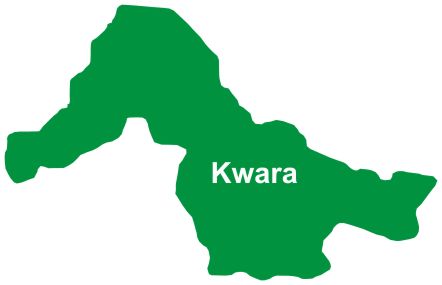
One case is that of the Yoruba in Kwara State, who, in February, alleged they were marginalised in the affairs of the state. They described as embarrassing the claims that the territories of the Yoruba of the North were the property of the defunct Caliphate.
Only recently, the Kwara-South Consultative Forum alleged that the Yoruba people in Kwara were marginalised and unfairly treated. It requested that special provisions be made in both Kogi and Kwara states to ensure adequate representations of the interests of the people at the conference.
In a communiqué signed by the KSCF Chairman, Joseph Aderibigbe; and Secretary, Simeon Daramola, on February 16, 2014, after its conference entitled, ‘Kwara Yoruba and the national conference,’ the forum said the Yoruba in the North had some age-long grievances over the structure of Nigeria.
The document read in part, “It is also resolved that the Yoruba of the North are not fairly governed in the states they are now forced to belong.
“Yoruba people of Kwara State reject vehemently their minority status in the North, where they have been permanently disadvantaged, especially in seeking political offices and key economic advantages. We are like a bat in the North, where as a result of our language and culture, we are regarded as Yoruba, and as a result of demographic partition, the South-West regards us as northerners.”
To have the dream of the Yoruba in the state realised, the group insisted the outcome of the issue of boundary adjustment at the conference should be subjected to a referendum to authenticate the desire of the people.
As a result, when it was time for the selection of candidates to the conference and the drafting of a unified agenda for the people in the South-West, the Yoruba in Kwara and Kogi states resolved to canvass for boundary re-adjustment to unite them with the South-West states at the conference.
The Yoruba in the two states include the Ekiti, the Igbomina and the Bolo in Kwara State; and the Okun and the Yagba peoples in Kogi State. Both Kogi and Kwara states are in the North-Central.
Luckily for them, while they may not be part of the representatives from their respective states, their aspirations have been included in the agenda of the Yoruba at the conference.
At the ‘Yoruba Assembly for 2014 National Conference’ held on February 27, 2014, the Chairman of a three-man committee, which drafted the Yoruba agenda, Chief Olu Falae, said the wishes of the affected people, who he referred to as those in “domestic diaspora,” would be reflected at the conference.
Another case is that of the Ogu/Egun ethnic nationality in the Badagry area of Lagos State, who protested against their exclusion from the conference.
The nationality, under the aegis of Gunuvi Rights Initiative of Nigeria, said the exclusion was a proof of their marginalisation in the state and demanded that the situation be remedied.
The state government had sent Mr. Femi Okunnu, Mr. Supo Sasore, Prof. Tunde Samuel, Mr. Waheed Ajani, Mrs. Olufunmilayo Oshinowo-Balogun and Chief Rabiu Oluwa as representatives.
But the National President of GRIN, Mr. Bokoh Oluwole, and Secretary-General, Mr. Ogunbiyi Isaac, in a protest letter to Governor Babatunde Fashola, dated March 4, said the representation of Lagos at the confab should have reflected the cultural and ethnic configuration of the state.
GRIN stated that the Ogus constituted about 15 per cent of the population of the state and should be given a slot “in matters of this nature.”
“We are of the view that all hopes are not lost because we believe in your sense of fairness, judgment and spirit of accommodation, which has seen you through the act of successful governance in Lagos State,” the group added.
In the letter entitled, ‘Unfair exclusion of Ogu/Egun ethnic nationality from the Lagos State’s list of names to the national confab,’ GRIN said Ogu/Egun ethnic nationality, who “constitutes the pivot of western civilisation in Nigeria,” deserved a place of pride in matters of national significance.
The group said, “It should be realised that the history of Nigeria will be incomplete without reference to the Ogu/Egun people of Badagry in Lagos State, bearing in mind that Badagry, apart from being predominantly Ogu/Egun-speaking, also constitutes the pivot of Western civilisation in Nigeria.
“We believe that Lagos State’s representation to the confab should have reflected the cultural and ethnic configuration of the state.”
Today, the Egun are in Lagos and Ogun states, and Benin Republic; and they are a minority in those places.
Also, the people of Etche Ethnic Nationality in Rivers State have expressed dissatisfaction with their exclusion from the conference.
The President-General of Ogbakor Etche, Mr. Sam Nwankwo, while speaking in Port Harcourt on Monday, said though Etche was part of the two previous national conferences, their exclusion from the ongoing conference was unexpected.
He argued that Etche people, as an ethnic nationality, did not need to lobby before being included as delegates. According to him, a major oil producer like Etche should not be omitted from the delegates’ list. He noted that the ethnic nationality had already articulated its views on many issues affecting the country.
Nwankwo said, “I can say that Etche people are not very happy about the exclusion of Etche from the delegates list. Nobody is happy at all because of the strategic nature of our ethnic nationality.
“We believe we don’t have to lobby for us to be included on the list of conferees. I am saying that because there had been two previous conferences, Etche has never been excluded; we have always had representatives.”
A Yoruba socio-political group, Afenifere Renewal Group, had described the selection of candidates to the conference as political. The group said delegates were allegedly nominated on who-knows-who basis. It said it was based on political leanings.
Nigerians with disabilities have also alleged that they have been sidelined from the confab. Just like the ARG, an organisation of the physically-challenged, the Centre for Citizens with Disabilities, said the selection of delegates to the conference was political. The organisation alleged that three of those nominated as delegates to represent those with disabilities were substituted by the government without notifying the nominees.
The Executive Director, Centre for Citizens with Disabilities, Mr. David Anyaele, told SUNDAY PUNCH that persons with disabilities had six delegates at the confab but they did not represent all sub-groups. Therefore, persons with disabilities were not pleased with their representation at the conference. He said delegates were selected as if they needed to rehabilitate them financially and not for intellectual discussion.
He said, “We were told that six persons would represent persons with disabilities to cut across the six major cluster groups that make up the disabled community in Nigeria. They include the physically-challenged, the deaf, the blind, the lepers, the spinal cord injured and persons with intellectual disability. What we have at the national confab is just for two groups – the physically challenged and the blind. Even those who are there (delegates) are not satisfied with their nomination, and this is giving us a serious concern.
“We do not know the yardstick they used to identify and select those they selected. Our association sent our list (of nominees) to the Office of the Secretary to the Government of the Federation but we discovered that three individuals on our list were not selected; three individuals were substituted.”
Cloud Tag: What's trending
Click on a word/phrase to read more about it.
JAMB Ali Ahmad Ibrahim Oniye Dan Iya HAMFAT Clinic And Maternity Kale Belgore Razaq Ayobami Akanbi Saidu Kawu Olatunji Moronfoye Taofeek Sanusi AbdulHamid Adi Gobirawa Muhammed Mahe Abdulkadir Shehu Raheem Adaramaja College Of Education Ilorin Like-Minds Col. Ibrahim Taiwo Abubakar Usman Jos Crystal Corner Shops Kamaldeen Gambari Monthly Sanitation Exercise Yahya Mohammed Alanamu Olaoye B. Felix Overland Elelu Akeem Olatunji Wahab Olasupo Egbewole Osi Y.A. Abdulkareem UNILORIN Alumni Association Sayomi Haruna Olawale Sulaiman Atiku Musa Abdullahi Islamiya Abdulraheem Presidential Election Grillo Salihu Jibril Garbi Olumide Daniel Ibitoye Sheikh Ridhwanullah Yakubu Danladi Offa Poly Sulu Babaita Isiaka Adebara Ilorin General Hospital Kwara-SAPZ Project Rice Farmers Association Of Nigeria Akom Construction And Engineering Synergy Ltd Oba Abdulkadir La\'aro Saliu Ajia Adebayo Salami AbdulQowiy Olododo Ishaq Salman Tinubu REO CAKES Ilorin.Info Eghe Igbinehi Dele Belgore Toun Okewale-Sonaiya Special Adviser On Digital Innovation Femi Agbaje Idowu Laro Saad Omo Iya Laolu Saraki Ajidagba RTEAN Shuaib Jawondo YAKOOYO Modibbo Kawu Ekiti Amuda Bembe Igbaja Ajeigbe Ayinde Oyepitan Kwara State Fish Farmers Association Funmilayo Isiaka Oniwa