


Opinion: Whatever Happened to Us? By Ifeanyi Uddin
To look at the country today, it is hard to believe that parts of Nigeria once moved to a different rhythm. That whole communities once set their clock by the schedule of companies' staff buses -- awaking for the day just before these vehicles came around to pick the paterfamilias to work, and turning in for the night as did the buses, dropping off each weary worker for just enough rest ahead of the following day's labour. Few, today in this country, remember that the workday comprised three, 8-hour shifts: 6.00am to 2.00pm; 2.00pm to 10.00pm; and 10.00pm to 6.00am. Staff (they were not yet "personnel" then) in administration functions ran longer work days: 8.00am to 5.00pm.
It was an ordered place. Against current practice, where attendance at primary and secondary schools' "assembly lines" has become a "nice to do", and where the chaos of the world wide web is the new normal; those were times when the "clocking machine" and the "time card" described much of the workplace's moral space. Few ethical breaches were more damning than having a punctual colleague "clock in" for one who was running late. Nor could you play shirk work easily. Such was the organisation of the factory floor that absentees stood out like a sore thumb. The "foreman's duties" were thus all important if the factory day was not to turn awry, and production quotas were to be met.
Even the calendar was in thrall to the factory's beat. Working through public holidays was de rigueur: few assembly lines could stop running at the turn of a switch, without considerable loss of inventory. "Off days" were, accordingly, structured to compensate for the ensuing losses. This discipline extended to children/wards old enough to be employed: growing up, the "vacation job" was the highlight of the long vacation. As much an opportunity to earn extra income, as a rite of passage, this was how we became adults: waking up before the staff bus made the rounds; clocking in just in time for work; and joining in the rush hour crush headed out of the factory gate.
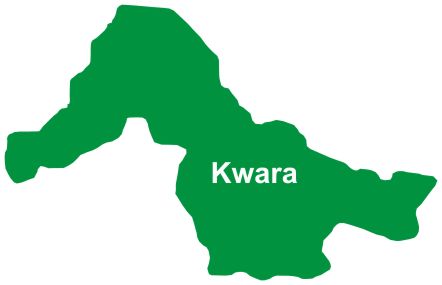
Where and how did we lose it? Turning from this level of organisation to the current chaos? My coevals argue that I may be substituting an idiosyncratic consciousness (growing up in Kwara State in the 1960s and 1970s) for a general one (growing up anywhere in Nigeria at about the same time)! And I readily concede strength to this observation. For in Ilorin alone, there were the Tate and Lyle Company, Phillip Morris, Nigeria Match Company (Matchco), etc. -- industry to whose cadence the ambient community marched. I am not too sure that there was on a per capita basis as much organised industrial activity anywhere else in the country as there was in that countrified space.
Yet, that may not be the whole story. For there is also the possibility that we lacked sufficient practice in the discipline of the factory. And that our current lack of organisation, indifference to the clock, and soft moral standards flow from this. My father's was the generation that inherited the organisation of the factory from the last white managers. And I was barely of age before those behemoths (all of them) tanked. By the mid-1980s, the industrial conurbation in Ilorin, along with the narrow stretch in Offa (Okin Biscuits, and Kwara Breweries), and the much bigger one to the north of the state (Bacita Sugar Company, Nigerian Yeast and Alcohol Manufacturing Company) had all bitten the dust.
However, this argument is weakened by a further observation: if the discipline of the factory noted earlier were strictly a private sector phenomenon, then my explanations for the subsequent putrefaction of our collective space acquire more valence. Alas, not even the public sector practice was reproachable then. And there, the transition from white managers to Nigerians had taken place much earlier.
Indeed, the Electricity Corporation of Nigeria (ECN) -- later the National Electric Power Authority (NEPA) -- was the epitome of public service. It was unheard of that a brown-out/blackout happened in Ilorin in the 1960s and 1970s without this authority taking out a full page advert in The Herald and slots on Radio Kwara (the day before) explaining the nature of maintenance work that had to be done, and the schedule for this. Always, we were enjoined to call certain service lines if electricity was not restored to our houses by the end of the planned maintenance period.
On account of which just about every adolescent knew the "pole number" that delivered electricity to their houses from the mains. These were the numbers against which calls to the ECN/NEPA office for "fault reporting" were referenced. And the service response? Impeccable! Not only did they reach your place on time. They also managed to resolve the problem just before the local television station commenced transmission by 5.00pm. Invariably, at the end of their work, they asked for, and we were only too happy to give them a drink of water. Not cold water, though. But just enough to slake their thirst.
How then did we become so thirsty that only billions of naira, illicitly obtained from the public coffers may now slake us?
Cloud Tag: What's trending
Click on a word/phrase to read more about it.
Magaji Nda Jimoh Saadudeen Muhammed Coronavirus Charles Ibitoye Kola Ologbondiyan Yusuf Amuda Aluko Olatomiwa Williams Ekiti High Court Centre For Peace And Strategic Studies Lanre Jimoh Peculiar Allowance Bayer Nigeria Limited Abdulkadir Akanbi-Oke Riskat Opakunle Mukhtar Shagaya Agor Market Abubakar Imam Bursary Oyawoye Abdulganiyu Oladosu Orisun Igbomina Saadu Alanamu Hausa AbdulGaniyu Kareem CT Ayeni Olupako Elesie Of Esie Abdulwahab Oba Chief Imam Of Omu-Aran Mohammed Lawal Bagega Ahmed Bolaji Nagode Balogun Ajikobi Abdulrazaq Akorede Ilorin International Airport Lanre Badmus Col. Taiwo NaAllah ITEM 7 Mohammed Kamaludeen David Adesina Oba Abu Muhammad Ghali Alaaya Hamza Usman Adama Isa Okoolowo Segun Adeniyi Akande Idowu Ayoola Muhammed Hassanat Bello Radio Kwara Oke Sunna Balogun Gambari Dauda Adesola Yomi Adeboye Mope Dasuki Belgore Tunde Yusuf Mamatu Abdullahi Bisi Oyeleke Adesina Simon Sodiya ASKOMP Henry Olaosebikan Halidu Danbaba Joana Nnazua Kolo Demola Banu Adebara Okeose Christian Cementary Abdulazeez Arowona Arca Santa Okin Biscuits Olatunji Ayeni Oba Abdulkadir La\'aro C2c@kwarastate.gov.ng Yakubu Mohammed Abdullahi Vasolar Sarkin Malamai Kehinde Baale Yusuf Amuda Gobir