


Opinion: Modest Proposals On Corruption By Okey Ndibe
Last week, I exchanged a series of messages on Facebook with a young man who accused me of exhibiting "sentiments" and "self-interest" in my column titled "Buhari and the Syndrome of Sameness". After I repeatedly challenged the guy to instantiate his allegation, he finally pointed to a line from my column: "The anti-corruption president has not done a single thing to invigorate the cause of arresting the plague [of corruption]".
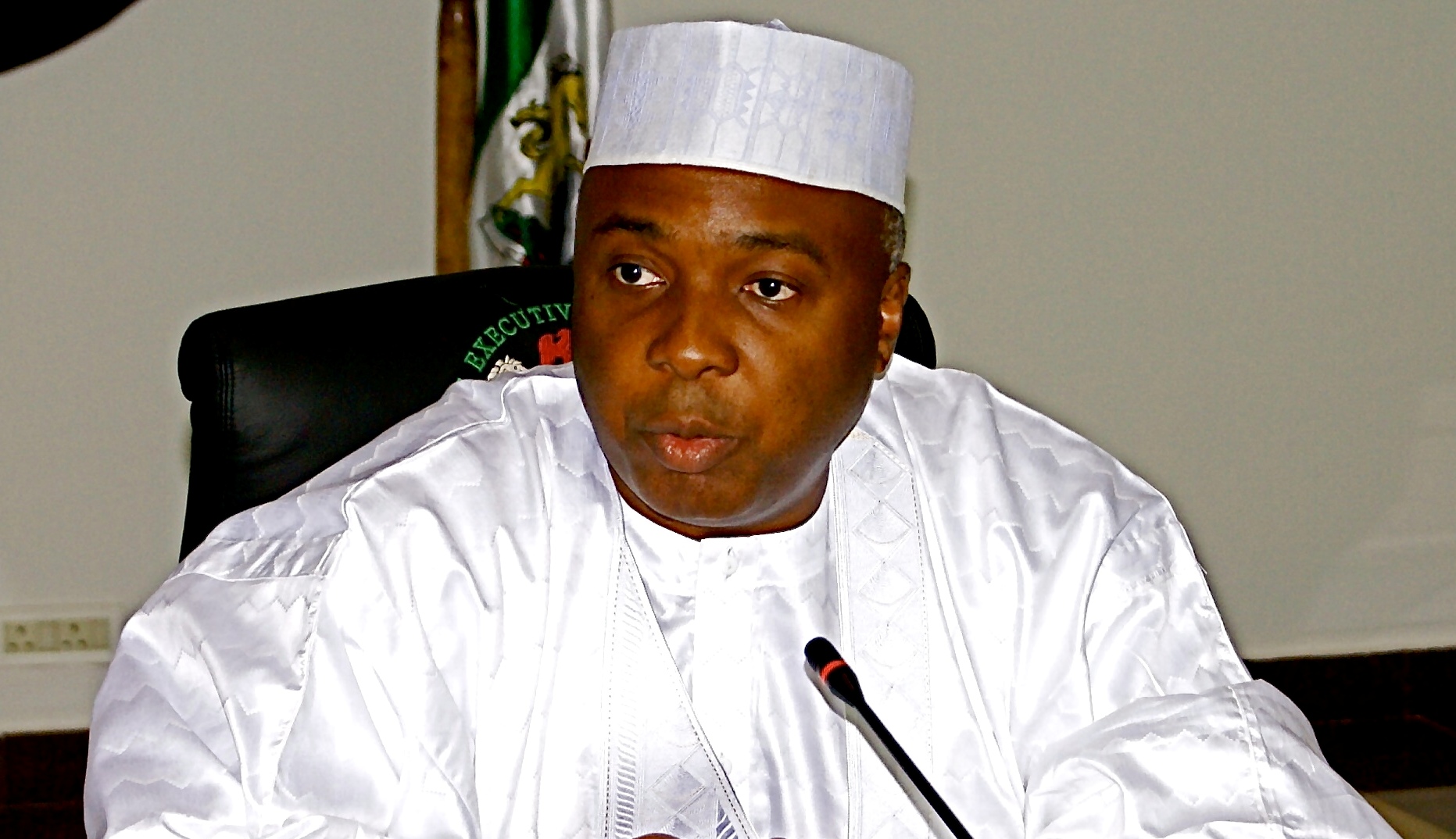
To demonstrate that the president had a robust anti-corruption stance, the young man pulled exactly the straw I'd anticipated: the prosecution of Senate President Bukola Saraki.
His contention, I'm afraid, is typical of a certain mindset in the Nigerian public square: arguments made with little or no sense of memory, even of recent events. I had to remind my interlocutor that each of Mr. Buhari's predecessors had also filed corruption cases against high-profile targets. In fact, in 2005, former President Olusegun Obasanjo's administration had accused then Senate President, Adolphus Wabara, of collecting $400,000 from Education Minister, Fabian Osuji, in order to approve his ministry's budget. Five years later, after a whole lot of legal mumbo jumbo, the prosecution collapsed.
There was another typical tack in the young man's submission. With something resembling a "got-cha" exultation, he reminded me that former President Goodluck Jonathan had, like Mr. Buhari, offered jobs to numerous people who were either under formal indictment or had public reputations for graft. If only the young man's span of memory extended beyond six months, he would have realized that I was a consistent critic of Mr. Jonathan's administration—on precisely the grounds of his wretched ethical standards.
Why then would I accept from President Buhari the behavior that I found execrable in the man he unseated? Besides, even though Mr. Jonathan had made the routine noise about combating corruption, few people, within his party and among the Nigerian populace, took him seriously. On the other hand, the present president made a fetish of pledging to be the harbinger and embodiment of change. His rhetoric got many Nigerians excited about the prospect of ramping up the heat on public officials whose unconscionable graft had created or deepened Nigerians' misery.
In his partisan haste to engage me in a pseudo-debate, the young man failed to digest the context of my censure of the current president. And yet that context was in full view, just after the regret that President Buhari had done nothing to invigorate the fight against corruption. "He has not sent a bill to the National Assembly proposing the establishment of courts devoted to cases of corruption," I had written. Then I added: "He has not prescribed any radical change in the way the Economic and Financial Crimes Commission (EFCC) carries out its mandate. In five months, he has not found time to speak to Nigerians about a new bold initiative to tackle corruption or to foster a new civic awareness of the tragic cost of corrupt practices."
Only those possessed of no sense of history would choose to declare victory on account, simply, of the ongoing prosecution of Senator Saraki at the Code of Conduct Tribunal. I have seen nothing so far to persuade me that the trial is going to last the distance, much less lead to a conviction. My hunch is that, at some critical stage-or even before the case gets to that stage-some "elders," "elder statesmen," "royal fathers," and "critical stakeholders" (in other words, the same nonentities who have criminally wrecked Nigeria) will gather and negotiate what's called "soft-landing" for Mr. Saraki.
At any rate, it's clearer today than ever before that Nigerians cannot afford the time and resources to litigate our way out of corruption. There are simply too many grasping criminals around—in the legislatures, judiciaries, civil service, state and national government houses, academia, the media, law enforcement agencies, and so on. If a quarter of the most corrupt people in Nigeria were to be prosecuted and convicted, there's not enough room in our prisons to incarcerate them. In fact, Nigeria would have to export these convicts to spend time in jails in other African countries.
Mr. Buhari would have a lasting impact as a crusader against corruption by pushing for systemic changes. For one, he should initiate the political and legal process to end the vector of corruption that's called security vote. Each month, certain government officials, including the president and governors, receive millions of dollars in funds that they can expend without scrutiny or supervision of any sort. The logic? That the funds are used for sensitive security matters liable to be compromised should a public accounting be mandated. It's no secret that most of the security votes is securely deposited in private bank vaults.
If Nigeria is to retain security votes, then the funds should be disbursed, not by political officials, but by security agencies.
Another item that ought to go: Nigeria's notoriously expansive immunity clause. In most constitutions that have immunity provisions, their purpose is to protect designated office holders from legal jeopardy in the exercise of the legitimate duties and tasks of their office. In Nigeria, the immunity clause protects governors and the president even if -especially when-they commit crimes.
President Buhari, if serious about fighting corruption, ought to champion a constitutional amendment to revise the country's immunity clause to ensure that it no longer shields men and women who engage in impunity.
How about measures to identify and rusticate corrupt judges, to strengthen the mechanism for choosing incorruptible ones, to vitalize the independence of the judiciary, and to transform the Nigerian police and other law enforcement agents into technically well-equipped, ethically grounded professionals?
A patriotic Nigerian writer and lawyer, Chuma Nwokolo, has developed an impressive and innovative system capable of catalyzing a serious war on corruption. He's named his idea "The BribeCode." Next week, I'll focus on the elements of this promising intervention.
Please follow me on twitter @ okeyndibe (okeyndibe@gmail.com)
Cloud Tag: What's trending
Click on a word/phrase to read more about it.
KWASSIP Mubarak Oladosu Dorcas Afeniforo Adanla-Irese Gbenga Awoyale Omupo Balogin Alanamu Tunde Saad Shonga Farm Project Salihu Ajia Adeola Abraham Kupchi Hosea Maxwell Ilorin Emirate Staff Association David Adesina United Nigeria Airline Garment Factory Okin Biscuit Ilorin Metro Park Col. Taiwo Abubakar B.M Abdulfatai Baakini Chemiroy Nigeria Limited Yahaya Jibril Usman Gbemi Saraki Aisha Gobir Henry Makinwa Saliu Alamoyo Al-Hikmah Radio Babatunde Ajeigbe Local Government Doyin Agbamu Lasiele Alabi Yahaya Muhammad Ghali Alaaya Binta Sulyman Mahmud Ayinla Giwa Bahago David Oyedepo Babatunde Idiagbon Tunde Idiagbon Road Ayobami Seriki Musa Aibinu Alabi Lawal Magaji Are Alimi Abdulrazaq Moshood Bakare Simeon Sule Ajibola Gafaru Olayiwola Olorisade Kwara Polytechnic Ayobola Ipinlaiye Salman Jawondo Vasolar Consultoria Admiralty Villa Emir Of Ilorin Tunde Akanbi Kudirat Arinola Lawal Abiodun Oyedepo Kwara United Atiku Azeez Bello Ayobami Akanbi Omar Bolaji Gambari TVC Female National Debate Kwara State University Of Education Labaeka Rotimi Atere Senior Staff Union Of Colleges Of Education Makama Of Kaiama Olabanji Orilonishe Ilorin Water Reticulation National Broadcasting Commission Nigeria Foundation For Artificial Intelligence Jalala Playing Host Okiki Awwal Jawondo Unicontinental Construction Company ASMAU PLAZA