


Esie: Nigeria's first museum, generates N10,000 monthly
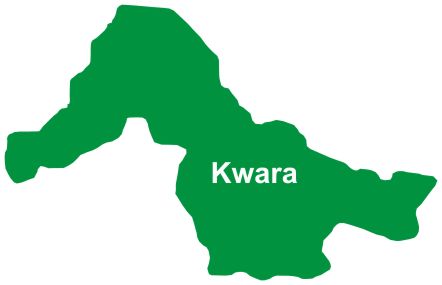
Esie Museum, Nigeria's first, was established in 1945. It is believed to house the largest number of stone figures in sub-Saharan Africa. It is now receiving a boost in terms of tourists' visit sas the notion that it is a shrine is gradually fading away. A visit to the historical place, which is located in Esie, Irepodun local government area of Kwara State, revealed that it needs urgent attention.
Esie is famous for its stone figures which, according to records, were discovered in 1775 by people said to be refugees from old Oyo who migrated to the location where the museum now stands. The initial discovery was by a famous hunter known as Baragon during his hunting expedition, who then went back to tell his people. The museum, which now has both old and modern galleries, houses more than 2000 objects. For 67 years the gallery was a mud structure which also served as the museum's store house and general office. Some of the objects in the museum were purchased, some others donated and the rest on loan from other museums across the country.
According to the Curator of the museum, Mrs. Elizabeth Mopelola Omowumi, the old gallery housed between 1000 and 1500 stone figures, while the modern gallery has over 500. In 2012, a modern gallery was built for that purpose and whoever came to the museum from any part of the country could see an artefact representing its people and cultural heritage. The modern gallery showcases cultural materials from every part of the country unlike before when it had only stone figures. The Chief Education Officer, Mr. Ajayi Johnson Ademola, the Esie Museum's oldest staff at the moment, was employed in 1988. He narrated the history of the museum.
"When I was employed there were about 20 of us but today we are over 40 staff. "When Baragon discovered this place, he went back to inform his people and they consulted Ifa (Oracle) to ascertain whether the figures were once human and Ifa confirmed they were but turned to stone because of their evil intentions and disobedience to the supreme being. Since then, they were worshipped. In 1933, it was brought to limelight by one of the European missionaries, an education inspector to the area who went back to inform the then colonial governor and the museum was established in 1945," the Chief Education Officer narrated.
After the discovery and establishment of the museum, there emerged an archaelogical school of thought about the stone figures. The archaeological thought, according to the Senior Assistant Museum Education Officer, Mr. Robert Omotoya, debunked the oral tradition, insisting that the stone figures were not human beings in the first place but were carved by unknown carvers, though he admitted he did not know the reason for carving them. "Mere looking at the figures, they are not human size, while they reveal carvers' working materials under them and they also believe that they were carved during the Stone Age," Omotaye narrated.
The stone figures were formerly in the custody of the community who worshipped them until their 15th and current king, Oba Babalola Egungunjobi stopped the practice and government took over. "When the idea of worshipping the stone figures was cancelled, the elite of the community came up with an idea of keeping it up. They then modernised it and named it a monument festival celebrated annually, when there would be series of programme to celebrate it. The celebrations include paper presentation and hunting expedition. The festival is usually in April but it has been stopped in the last two years due to reason best known to the people," Ademola explained. According to him: "When we don't have objects, we usually purchase them or loan from other museums that have excess. We loan some of the objects in the modern gallery from the Lagos museum just like we have some of our objects too on loan to them.
"The price depends on the value of the object because before you can call any object an antiquity in museum, it must have been used for one festival or the other and when they come to museum we regard them as priceless objects. We have different mode of acquisition of objects. We get them through excavation by archaeologists and we have some field workers who negotiate with the owners but the museum usually determines the price. We don't buy contemporary art work. We buy objects of antiquity while some people donate objects as gift to the museum. We get some through seizure from our border post. Our objects of antiquity can only be taking out outside Nigeria for international exhibition with government approval."
Usually, the museum ought to acquire objects monthly, but the economy of the country has hampered this. On the preservation of any object acquired, it is first photographed and then its features are documented along with its origin and usage while a register will be opened for it. If the object is in bad condition, a conservator takes it to the lab to prevent further deterioration. Objects undergo a form of 'treatment' before they are displayed. Some of the stolen Esie artefacts, found in France, were returned a few years ago, but are still at the National Commission for Museums and Monuments (NCMMs) headquarters in Abuja.
"Some of them were returned through restitution because the International Council of Museum (ICM) has enacted a law which says that every cultural materials in another country other than where they are originally from must be returned to their source which was why we got those ones back. Once they finish all the analysis and write-ups on it, they will return them to Esie. And if it remains there, it is still the same thing because the museum is under one umbrella," Ademola explained. Regardless of how much noise is made about Nigeria becoming a tourist haven and income generator, and how much other countries have done to achieve this, Nigerians seem sonly to be paying lip service to this as tourism officials don't consider places like Esie tourist centres; they rather consider them as shrines and fetish spots.
It is on account of this that staff of the museum embarked on sensitisation exercises to disabuse this perception from the minds of potential and already visiting tourists. "We have also succeeded in attracting people to visit this place for relaxation and education of our younger generation. We have been carrying out sensitisation programme to market the museum to encourage people to visit," Omowunmi told Daily Trust.
She added: "The sensitisation programme has also changed people's thinking about the museum. Initially, many people believed that what we have here are objects of antiquity that we worship. But we were able to convince them with our road show and radio programmes that the museum is not a shrine or a place of fetish but a place of education, relaxation and research. "Since then, the visit to this place has increased. We usually have about 100 people monthly but now we had more than a thousand people visiting here on a monthly basis and more than 2000 during festival."
Part of their efforts, she said, include reaching out to law enforcement agencies like the Custom and Immigration to sensitise them on how to identify the contemporary objects and objects of antiquity in our border post. "Whatever they intercept at the border, they have to inform the museum because the museum is the only accredited agent that can issue export permit and once such object is discovered, the museum has to identify it," she said. During the Children's Day celebration, the museum packages programmes for secondary school students on cultural heritage. They are sensitised on the importance of Nigerian culture and the fact that the museum is not a place of worship, and educated on the stages Nigeria has passed in terms of development. With all the efforts put forward so far, we make about N10,000 monthly and even this is not regular," the chief education officer said.
With a recent robbery attack on the museum, Ademola said: "The men of the Nigerian police complement the effort of our security because a police officer is usually posted here at night to support our security and the place has also been secured with the building of fence around the gallery. The security arrangement comprises of internal and external fences to secure objects in the museum." The museum has impacted on the community positively. In the area of unemployment, some of the indigenes of Esie have been employed to work in the museum and their economy usually receives some boost whenever people visit the museum.
Cloud Tag: What's trending
Click on a word/phrase to read more about it.
Valsolar Consultoria Fatai Olodo IPSAS Omu Aran Prince Mahe Abdulkadir Mutawali Dorcas Afeniforo AbdulKareem Yusuf Danhawa Share/Tsaragi Peter Amogbonjaye Sanusi Abubakar Yekini Adio Chief Imam Of Omu-Aran Abdullahi Adisa Akodudu Kola Olota Obayomi Azeez Alaro Unilorin FM Mohammed Alabi Lawal Boko Haram Alao Ayotunde Aliyu Adebayo Tafida Of Ilorin Moses Adekanye Maimunat Oloriegbe Madawaki Of Ilorin Idowu Aremu Baba Issa Awoye Ile Arugbo Aremu Odolaye ASKOMP Elerin Of Adanla Irese Gobirawa Pilgrims Board Kwara State Football Association Femi Agbaje Mustapha AbdulGaniyu Sanitation Exercise Laolu Saraki Isaac Gbenle Binta Abubakar-Mora Irepodun Kwarareports.com Bayo Mohammed Onimode Kamaldeen Kehinde Tosin Saraki SDP Isiaka Saka Opobiyi Federal College Of Education (Special), Afon Abdulrahman Abdulrazaq Olaoye B. Felix Abdul Jimoh Mohammed Muhammadu Buhari Mopelola Abdulmaliq-Bashir Omoniyi Ayinla Yusuf A. Usman MalHub Senior Special Assistant On Student Affairs Mohammed Katsina Ahmed Paul Odama Isin Olota Of Odo-Owa Yakubu Gobir Idi-Ape Abubakar Suleiman Ilorin Durbar Muazam Nayaya Sodiya Mustapha Akanbi IHS Towers MAI Akande Afusat Nike Ibrahim Elese Of Igbaja Adamu Atta Aliyu Umar Special Agro-industrial Processing Zone Madawaki