


Significance Of World Water Day
Today is being observed across the globe as World Water Day. It is a day to celebrate water and make a difference for members of the global population that suffer from water-related issues. It is also a day set aside to draw awareness of the international community to the importance of the natural resource and how to manage it now and in the future.
The first World Water Day, an initiative of the United Nations General Assembly, was celebrated on March 22, 1993. The theme for this year's commemoration is "Better Water, Better Jobs". This year's theme particularly focuses on the central role that water plays in creating and supporting good quality jobs, as well as contributing to a greener economy and sustainable development. Water is the essential building block of life. About 60 per cent of body fluid in an average adult is water. The brain and heart are composed of 73 per cent water, while the lungs harbour 83 per cent. Water is also more than just essential to quench thirst or protect health; it is vital for creating jobs and supporting economic, social and human development.
According to the US Geological Survey, the land-to-water ratio is 29 per cent to 71 per cent. However, about 96.5 per cent is saline water contained in the oceans, while about 68 per cent of fresh water is largely inaccessible. However, it is an irony that despite the fact that the earth planet is overwhelmed by water, about 650 million people do not have access to safe water, putting them at risk of infectious diseases and premature death. Recent statistics released by the United Nations show that unsafe water and poor sanitation account for the killing of more than 900 under-five kids every day or one child every minute somewhere in the world. It is a universal fact that non-availability of safe water poses a serious threat to the survival of mankind. In Nigeria, accessing safe water is a mirage despite the establishment of ministries of water resources both at the federal and state levels.
The rural communities which harbour more that 75 per cent of the populace do not have access to safe water. They largely depend on streams, ponds, rivers and other unhygienic sources. Consumption of water from untreated sources comes with grave health consequences like diarrhoea and other water-borne diseases. The story is also pathetic in the urban centres. Public water works are either inefficient or there is no electricity to power them. The populace is thus left at the mercy of the ubiquitous water vendors. To fill the vacuum, the wealthy ones in our midst resort to self-help by drilling boreholes.
It is also public knowledge that some businessmen have cashed in on the situation by drilling boreholes for commercial purposes. Promises of boreholes have also become instruments of campaign by politicians, resulting in the arbitrary perforation of the earth across various communities in the sub-urban and rural areas. According to experts, proliferation of boreholes comes with its own danger. Not too long ago, a renowned hydrologist, Mr. Olalekan Omojowa, cautioned the federal, state and local governments on the possible occurrence of earthquakes in most parts of the country as a result of indiscriminate drilling of boreholes.
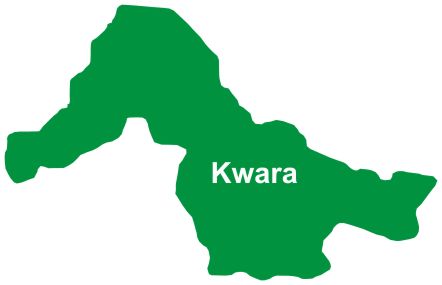
Speaking with Middle Belt Today after receiving an award from the Correspondents Chapel of the Nigeria Union of Journalists (NUJ), Kwara state chapter in Ilorin, Mr. Omojowa, who is also the chief executive officer of NOVENA Nigeria Ltd., explained that "the earth crust is what the people are puncturing when they drill boreholes in their various homes", adding that when the earth is punctured more than necessary, all that is needed for an earthquake to happen is just a shake from any source. He then charged government at all levels to intensify efforts at providing potable water for the people to discourage private sinking of boreholes.
The cliche, "water for life", captures the importance of this basic social amenity to the survival of mankind and its environment. As Nigeria joins the rest of the world in commemorating the Day, we enjoin all levels of government to take a harder look at the nation's water policy which does not favour the masses with a view to redressing the pathetic scenario. Until this is done, the annual celebration of the World Water Day will be a meaningless exercise as far as Nigerians are concerned.
Cloud Tag: What's trending
Click on a word/phrase to read more about it.
Sheu Ndanusa Usman Aminu Adisa Logun Yahaya Seriki Jaiz Bank Just Law Forum Lanre Issa Onilu Ilorin Amusement Park Babajide Ajayi Vasolar Consultoria Agor Market Curfew Femi Oladiji Titus Suberu-Ajibola Mohammed Tunde-Jimoh Offa Grammer School Eleja Taiwo Banu Abdulwahab Olarewaju Issa Folorunsho Erubu Dairo Kunle Paul Ibrahim Mohammed JAAC National Association Of Nigerian Students Maryam A. Garuba Micheal Imoudu Oniye Apaokagi Ademola Kiyesola Gurei Dankaka Grillo Muritala Olarewaju Mutawalle Yusuf Ali Kwara TV Umar Saro Halidu Danbaba Biliaminu Aliu Adebayo Mohammed Kamaldeen Ilorin Central Mosque Joseph Bamigboye Babatunde Idiagbon Shola Odetundun Ogidi-Oloje Oloriegbe Abdullahi AbdulMajeed Shuaibu Yaman Abdullahi Bayo Onimago Dauda Adesola Hassan Oyeleke Salihu Alhaji Musa Road Transport Employers Association Of Nigeria Ajayi Okasanmi Teachers Specific Allowance James Ayeni Oya State Amina Susa\'a De Ahmed Yusuf Lanre Badmus Lateef Alagbonsi Muyiwa Oladipo Kanu Afolasade Opeyemi Kemi Oluwole Dupe Abubakar Abdullahi Bata Rafiu Ibrahim Modibo Kawu Opaleke Bukola Iyabo Okin Biscuits Federal College Of Education (Special), Afon Mustapha Olanipekun Bello Taoheed Abubakar Abdullahi Dasilva Yussuf Sardauna Oba Abdulraheem Yoonus Lawal Abdulwahab Ololele Women For Change And Development Initiative Ebola Ilorin Airport