Recession - Nigerian Traders, Small Businesses Lament Impact of Economic Recession
Date: 2016-12-14
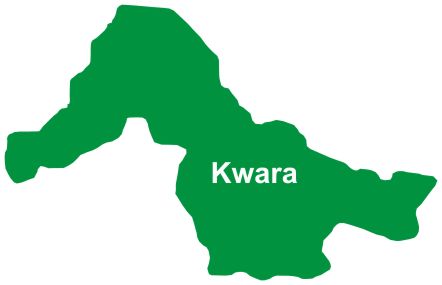
Business owners and traders at some of the major markets in Ilorin, the Kwara State capital, have complained over poor sales.
A survey by PREMIUM TIMES revealed that the poor sales came as part of the ripple effects of the economic recession plaguing the nation.
The traders lamented the impact of the poor sales and expressed hope that things would improve once the economy is normalised.
Shade Oduola, a dried fish seller at Yoruba Road market who spoke with PREMIUM TIMES, explained that there is no money in circulation and it affects the consumption pattern of customers. She maintained that it was far worse than what they experienced last year.
"Sales and rate of turnover have been very poor. Many customers do not have money, while traders have been turned into bench warmers in the market. Sales have never been this terrible, quite unlike what we experienced last year."
When probed further, she lamented the increase in the cost of dried fish, saying it is one of the reasons customers don't patronize her any longer:
"As at October last year, dried fish that sold for N18,000 now goes for between N26,000 and N28,500, even directly from the market. Of course, the ones we sold at the rate of N500 or N650 now sells for N900 or 1,000 and our customers are complaining."
When PREMIUM TIMES visited the stall of Hajia Adijat, a butcher at Unity market, she lamented the poor state of the economy, calling on the government to quickly intervene because the people are suffering.
"Nigerians are really suffering, there is no money in circulation and things are costly. The goat we used to buy for N4,000 naira now sells for N6,500 and when we begin to sell in pieces, people will not patronize us because of the high cost. We have been here since morning and as you can see, we haven't sold anything," she said.
Another butcher who simply identified herself as Simbiatu complained bitterly about the drop in sales due to the poor state of the economy.
"Before now, I make an average of between N9,000 to N12,000 daily; but these days, I would have to stay here till late in the evening before I would be able to sell meat worth N3,000.
"As I speak, my children are at home playing because two weeks ago, they were sent out of school for non-payment of school fees," she said.
Agbaje Jaiyeola, a boutique owner at Unity area, attributed high price of goods and low sales to increase in the exchange rate of dollar to the naira. She however maintained that once the exchange rate is regulated, the price of goods will be normalised.
"Forex has increased from what we used to buy. More so, it's not readily available as most of us buy from the black market. Based on this, the difference will definitely reflect in the prices of the items," he said.
Remi Bashorun, a foodstuff seller at Taiwo-Isale, said traders only watch people go around pricing goods without buying them.
She attributed the bad situation to the poor state of the economy and non-payment of workers' salaries.
"We only see people walk around the market pricing goods but they do not buy anything . It is so painful. There is no money in circulation because workers are being owed backlog of salaries.
"This is affecting sales and no one understands the state of the economy now," Ms. Bashorun said.
She added that unlike in the past when she made between N25,000 to N40,000 daily, she now struggles to sell foodstuff worth 15,000 daily.
For Isaiah Igwe, an electronics dealer at the Challenge electronics market, sales were low because there is a new government in town.
Mr. Igwe also said that prices of electronics and electrical gadgets were high and may even go higher next year.
"There is change. Buhari has taken over and nobody understands his economic policy. People are taking their time, so they are not buying things. Everything is just difficult for people. I just hope things get better in the coming days.
"As per electronics, beginning from next month, prices may even go higher than we presently have. People cannot access FOREX and all this will bounce back on prices. As I speak to you, dollar is around four hundred naira and above. This is frustrating", he said.
For Joseph Isaac, a barber and recharge cards retailer at the old Government Residential Area, GRA, sales have been very poor.
"People no longer patronize me like in the past and these days, I struggle to sell recharge cards. Before the recession, I used to realize roughly N8,000 to N10,000 daily from barbing alone but now, it is between N3,000 to N5,000."
At the open market under the overhead bridge at Post office, investigations revealed that sellers of clothes, shoes and cosmetics were most affected by the poor sales.
"I have sold only one single pack of make-up kit today. Look at your time; it is about 4 p.m. The same is applicable to my colleagues here. We hope it will be better in the days ahead," Aina Sotubo, a cosmetics seller, said.
When PREMIUM TIMES visited the section of second-hand clothes, popularly called 'Okrika', the situation was the same. The traders who are mainly from the eastern part of the country were seen sitting idly in their shops while those who own makeshift shops abandoned their wares due to poor sales.
Most of them declined speaking with our correspondent, responding angrily that sales are poor. When probed about the cause of the poor sales, Okosi Nnamdi, a second hand clothe dealer from Onitsha, revealed that sales have nosedived due to the economic downturn and scarcity of resources.
"We have been sitting like this since morning, no sales. Our customers are students, especially those higher institution girls but most of them can no longer feed themselves and meet basic needs in school. "When they come around, they complain of no money. So they rarely patronize us these days. Do you think about clothing and fashion when you cannot feed yourself?"
Stanley Onuoha, another used cloth dealer said, "The prices of clothes have increased. Clothes that sold for N300 in the past now sell for N500 and above. In fact, you cannot find Okrika clothe of N200 in the market these days. It is really bad."
Source