


Ethnic Pluralism in Ilorin by LAK Jimoh
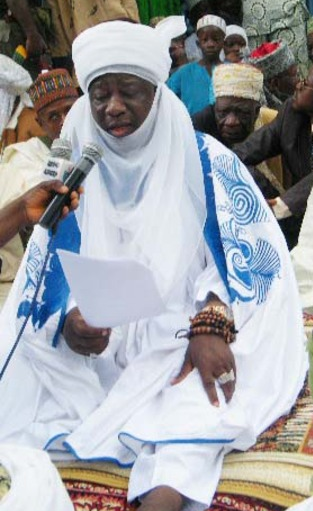
That Ilorin, at a point in time, was peopled almost exclusively by Yorubas, is not in dispute. However, with the passage of time, the community became culturally multifarious following the influx of a multiplicity of other cultural and sub-cultural groups so much that by the time civil strife occurred between Afonja and Shehu Alimi`s Jama`a about 1807, the combined population of the Jama`a in Gambari, Fulani and Okesuna areas who were mainly non-Yorubas had greatly exceeded that of the Kakanfo`s compatriots who were confined to Idi-ape and its environs, including Dada.
It is incontrovertible, for instance, that at the time of Shehu alimi`s arrival in Ilorin, the area now called Alanamu and Ajikobi wards were sparsely inhabited. The areas were opened up later for settlement by some Yoruba members of the retinue which accompanied Shehu Alimi to Ilorin under the leadership of Usman and Se`eni who afterwards became Balogun Ajikobi and Balogun Alanamu respectively.
It was a massive influx of people of assorted cultural background, after Islamic governance had been firmly established, that conditioned the demographic size, composition and texture of Ilorin. With the resultant ethnic and cultural heterogeneity, Islam became the common denominator and the only unifying factor. It facilitated inter-mingling, socialization and integration among the various peoples.
Consequently, a unique Islamic culture, into which the diverse cultures melted, emerged. However, the infectious Yoruba language became the lingua franca.
The consequent submergence of all other languages into Yoruba gives an illusory impression of monolithic culture by obscuring the cultural pluralism inherent in the Emirate, particularly in Ilorin, where a substantial proportion of the indigenous population is anthropologically non-Yoruba.
For example, the following non-Yoruba families randomly sampled in the seemingly Yoruba-dominated “Oke Imole” no longer bear their original non-Yoruba identities. This illustrates the depth of cultural assimilation that has occurred and gives a deceptive impression of the ethno-cultural complexity of Ilorin.
The core families in Agbaji namely; Ile Saura, Ile Aburo, Ile Baba Sa`are, Ile Agoro and Ile Imam Agbaji were originally Sudanese Arabs from a town called Ar-Baji on the Blue Nile. So also were the ancestral parents of the people of Ile Ara-Agbaji at Masingba, Oke Imole. Ile Hejebu, Ile Singini, Ile Oloko, Ile Oniko, Ile Ada-Ara and Ile Majo are extensions of the core families in Agbaji.
Members of Ile Ibrahim Bature at Oke-Apomu are Arabs by origin. They migrated to Ilorin from Agades from Niger Republic. The Ojibara family in the same area is of Fulani descent. They initially sojourned in Borno before they migrated to Ilorin finally.
The people of Ile Ture of Ode Alausa, like members of the core families at Agbaji are Sudanese migrants in Ilorin.
The Solagberu family at Agbaji, the Onagun family of Ita-Egba, the members of Ile Oloyin (formerly called Ile Igbon) at Ita Elepa, the Giwa family of Popo Giwa and the Mekabara family of Ita Ogunbo are Kanuri migrants. Solagberu migrated from Bama in Bornu and was founder of ancient Okesuna. The Oninahu family at Kuntu and Muqaddam Adangba`s progenitors were Kanuri kins of the Giwa family at Popo.
The family of Magaji Kuntu are Boko-Barubas paternally and Fulani maternally while members of Ile Eleran in Adangba are Barubas. Both of them migrated to Ilorin via Kobayi.
Some of the other families which migrated from Kobayi to Ilorin are Magaji Oku-Ajanaku of Oke-Kura who are Fulani, Baba Kinni (that is Shaikh Saliman Ake`s family) of Omoda and the Imam Imole family (at both Oke Imole and Fa`agba), who are Malians.
The Ala`aya family of Pakata/Ubandawaki, the Elewu Sanyan family and the Ile Ele`eru of Popo Giwa /Okeleru area are Malian Fulani by origin. The renowned Alfa Nda-Salati was, of course, Nupe.
Members of the following families are Hausa by ancestry: Ile Alalikinla (that is, late S.K. Dan Alhaji`s family) at Ita Ogunbo, Ile Shiru at Ode Alfa Nda, Ile Saba`ani (that is, Ile Imam Kadara) at Ode Alausa and Ile Saba`ani at Idi-Orombo, Ile Jawando at Ita Ogunbo and Ile Alfa Ajongolo, which was formerly called Ile Alapata.
Ile Kakandiyan now called Ile okudile on Popo Giwa is Nupe while Ile Tejidini at Idi Igba is Fulani. Members of Ile Alaro of Popo Giwa are Gwari.
Magaji Ojuekun family is paternally Kanuri but maternally related to the Alaafin of Oyo while the Afunku family of Alanamu has Baruba ancestory.
A similar random sampling of families in Balogun Fulani ward indicates that the ward, contrary to popular assumption, is ethno-culturally more Yoruba than Fulani even though it is called and regarded as Fulani ward. The following examples illustrate the point:
The famous Alfa Tukur Asunnara and Alfa Erubu were Yoruba.
The Alaya-bi-agba family is Igbomina from Omu-Aran as are Oniyangis who came from Ada-nla near Igbaja; the Edun family, which is Igbomina, too, came from Ila Orangun although Alhaji Buhari Edun had a Nupe mother.
Babatunde Gada, the first secretary of IEDPU, who resided in the Fulani ward, came from Laduba. Members of the other notable families of Fulani ward, like the Audu Gada family, with whom the name “Gada” is associated came from Igbomina land. The family of late honourable Ibrahim La`aro, too, came from Igbaja.
In the case of Balogun Gambari ward, although the word is preponderantly a mix grill of Hausa, Kanuri, Nupe, Gwari, Baruba and Kemberi. There are Yorubas even among the key chieftancy families in the ward. The Ajia Opele of Ita-Ajia is one of such families. Members of Abubakr Lah`s family in Ile Alaro of Baruba area are Yoruba from Oyo-Ile and came to Ilorin via Ogundele.
Because of the adoption of Yoruba as lingua franca, names, especially cognomen, are deceptive, regarding their ethnic origin of their bearers. For example, the Ilorin man with Yoruba cognomen: Alabi Opo may, infact, be a Torokawa Fulani by ancestry. This phenomenon ventilates the magnitude of acculturation in Ilorin.
Culled from:
*“ILORIN –THE JOURNEY SO FAR”* BY L.A.K. JIMOH
Cloud Tag: What's trending
Click on a word/phrase to read more about it.
Saka Adeyemo Kanu Agabi Asa LGEA School Yusuf Amuda Gobir Unicontinental Construction Company Kemi Adeosun Paul Olawoore Vishvas KOZ Tractors Abiodun Abdulkareem Yahaya Oloriegbe Laboratory-to-Product Gani Saadu Modibo Kawu Alabi Olayemi Abdulrazak Bello Bature Maigida Soludero Transit Admiralty Villa Lai Gobir Kola Bukoye Moshood Mustapha Aisha Abodunrin Ibrahim Ijagbo Aliyu Alhassan Photo News Mahmud Babatunde Baker CELF SDP Code Of Conduct Tribunal Olabode Towoju Lanre Aremu Falokun-Oja Abdulmumini AbdulRazaq Alagbado Minister State Bureau Of Internal Revenue Taofik Mustapha Hassan Oyeleke Otoge Adeniyi Ojo IYA ALFA NLA Abdulfatai Ahmed Halidu Danbaba Owu Fall Bello Abubakar CT Ayeni Government High School (GHS), Adeta Oko Rex Olawoye Aremu Bose Deborah Busari Toyin Isiaka Awoye Iqra Books Omupo Abdulkadir Remi Hawawu Micheal Imodu-Ganmo Road Muyiwa Oladipo Kanu Akanji Yaru Joseph Bamigboye Government House AGM Professional Services Hassan A. Saliu Kwara State Geographic Information Service Ajibola Ademola Julius Yusuf Abdulkadir Alikinla Tafida Of Kaiama Muritala Olarewaju Garment Factory CUTI Mohammed Abduraheem Abioye Bello John Olobayo Association Of Kwara State Online Media Practitioners Jide Ashonibare S.O. Opowoye Apata Ajele Secondary School