OPINION: Hijab By Olakunle Abimbola
Date: 2021-04-14
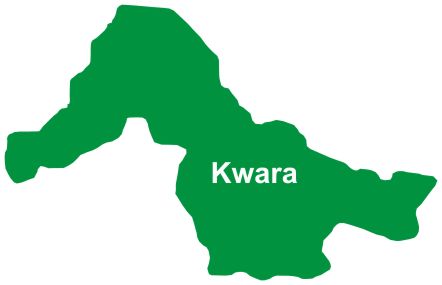
The Hijab, and the excessive love or hate it evokes, underscores the tricky cohabitation the colonial Brits left Nigeria's public space.
The colonial bureaucracy was basically Western - and Christian: days of work, dress of work and the entire panoply of colonial officialdom.
Yet, the British successors, in the new Nigerian order after independence, were Muslim-led, northern politicians.
Prime Minister, Alhaji Tafawa Balewa, adroitly navigated that delicate balance: Muslims working within a Christian frame. But Muslim rights activists, down the years, were bound to challenge that status quo - skewed in their view.
That is the root of the present Hijab "activism". But contrary to impassioned Christian-leaning media commentaries, there is nothing sinister about it. It's just a manifestation of citizen rights, though in the religious sphere.
But back to the fundament of a Christian-leaning public order. Its most obvious pointer, now nevertheless "normal", is simple: you rest on Sunday; work on other days.
Sunday is the official Christian worship day (though Saturday is the Seventh-Day Adventists', a Christian sect). How Saturday got freed, as extended "weekend", is another testimony, to the powerful Christian lobby, in Nigeria's public space.
In contrast, Friday is the Muslim worship day. Yes, the public sector and businesses have somewhat squeezed out the Jumat worship time, from work hours on Fridays. But that is nothing compared to Sundays, which Christians have all to themselves, to do as they please.
Yet, challenging that skew gets the questioner tagged as "Muslim fanatic". That is systemic bullying - and is hardly fair, in a multi-religious democracy that claims to be secular.
Yet, that is the illiberal temper Christian-leaning commentators tap into, when the Hijab question crops up: branding themselves sweet saints, up against repellant sinners.
The holy Father Matthew Kukah just did his seasonal tirade, linking Hijab to the "political" Shariah that swept through the North, from Zamfara State; from 27 October 1999, though Zamfara's criminal Shariah came into force on 27 January 2000.
True, the mischief of "political shariah", while a southern Christian was elected president, was clear. But how does that vitiate the fundamental right of the Muslim girl to wear the Hijab, if she so desires, as part of her innate identity, and projection of her faith?
Of course, the Holy Kukah, well adept at muddying the waters, virtually decreed both are one and the same; sure his "speaking truth to power" zealots would swallow his polemic without thinking. It's such a ringing abuse of pulpit and public platforms!
Then, celebrated columnist and revered voice of print journalism, Ray Ekpu, penned a one-sided piece on the Kwara Hijab controversy.
Aside from misreporting the Court of Appeal verdict (endorsing a Kwara High Court decision on the matter), Mr. Ekpu would have been absolutely blameless, had he front-loaded his Christian bias - legitimate and understandable, being a Christian himself.
But he made it out as if his view - a Christian partisan's view: again, hardly illegitimate - was the view: correct, universal, commonsensical and cosmopolitan; making the Muslims' equally legitimate, but contrary position, crude, backward, outdated and savage. That's not true.
But that is the grand pretence, laced with conceit, that the Christian-leaning lobby always push, on the Hijab, which they don't understand; or even bother to, just because they boast formidable media penetration.
That hypocrisy comes with an additional fraud: an illiberal lobby, baiting the reasonable and the unprejudiced, in the best of liberal traditions, to impose their skewed, hardly liberal view, as the received wisdom of high and polite society.
To be clear: on the Hijab, there is no saint or sinner. Each partisan only hustles for own faith, in the gullible market of public opinion; each belching to the converted, during seasons of inter-faith disputes.
But that doesn't mean folks should not push for basic fairness, even as the partisans exchange fierce and sporadic fire. That can't be done unless you penetrate the genesis of it all. That is why this fore-backgrounding is vital.
So, drained of any religious bias either way, the Kwara Hijab controversy is not as complex as it appears. But that is if you eliminate the basic misconceptions that skew the discourse and poison the exchange.
First, there is nothing "secular" about any school uniforms. Christian missionaries were pioneers in founding schools. But that deal came with proselytizing the Christian faith. So, if Christians founded those schools, their uniforms couldn't have been "secular".
That logic applies to every mission school, Christian, Muslim or neither - neither because in Lagos, Gaskiya College (founded 1962), balked at the conventional uniform and essayed something different.
But back to Kwara. Those schools, which now claim to be "Christian", are so because the government was gracious enough to retain their original names, in honour of their founding missionaries, after pumping public cash into running them.
That was the crux of the Court of Appeal verdict on the matter. But that they are public schools, in a secular state, doesn't cancel the religious rights of the multi-religious citizens, that people the schools.
Still, constitutional rights are an equal opportunity business. They cover the crow of the Christians - over the school's name, history and evolution - without swallowing the right of the Muslims, now part of the school's evolutionary tapestry, being now a public school, open to all.
That is where the Muslim girl's right to wear the Hijab, if she so desires, fits pat. Yes, the optics might be disturbing, to the deeply religious. But mutual respect and sensitivity would blunt all that. But alas! Tolerance is no great strength of either side!
Still, before folks duel to the death, what really is the difference between the Hijab and the hood worn by the Catholic nun - or even by the local Aladura zealot? All came from a common Semitic tradition, which here translates to either Christian or Muslim.
But that the Aladura sect - among the first wave of African Pentecostals, during the intra-church African nationalism blitz of the 1880s - adopted the practice, speaks to its resonance with the native population.
Five years after Amasa Firdaus insisted on her hijab, and caused a storm delaying her call to Bar by one year, Britain which legal system Nigeria copies, just trashed the wig for hijab-wearing female barristers and judges.
"Hijab-wearing barristers are exempt from wearing the traditional wig in court," said a BBC report of March 30, "but there isnt any guidance on what this should look like."
The hijab is no threat to anyone. It only projects the religious identity of its wearer - hardly a crime. Enough of Christian illiberalism in the Nigerian public space.