


"Our farming experiment has passed its sell-by date" - Shonga 'White' Farmer
Some people retire at 65 and move abroad in search of sun. Graham Hatty travelled to the middle of Nigeria to carve a farm out of tropical forest.
It was January 2005 and the maize farm he had owned for 40 years in Zimbabwe had just been confiscated under the country’s land reform programme and given to the former army chief.
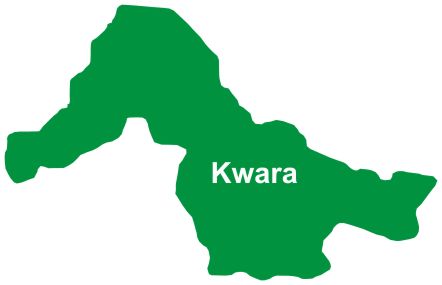
While packing up, Mr Hatty heard of a Nigerian governor who was offering dispossessed white Zimbabwean farmers 1,000 hectares of land in Kwara state and start-up money. Thirteen of them accepted, including Mr Hatty. He named his farm Ireti "Hope" in Yoruba.
"I did not want to become a burden on my children so I thought ‘what the heck’," says Mr Hatty, who is now 73 and still on the farm. "There was nowhere else in the world that we were going to get this chance."
This was no act of charity by Nigeria. The Zimbabwean farmers were part of an experiment to see "if commercial farming could work" in Africa’s most populous nation, Mr Hatty says. Or at least work again.
At independence in 1960, Nigeria was an agricultural powerhouse, the world’s biggest exporter of peanuts and palm oil. But petroleum had just been discovered and when the oil boom started, farming was quickly forgotten. Today, 97 per cent of the country’s export revenues come from oil and gas.
Although agriculture accounts for 41 per cent of gross domestic product and is the country’s biggest employer, most farms are small and yields are low. Per capita growth in production has been declining for a decade, the agriculture ministry says, and Nigeria has become increasingly reliant on crops grown abroad to feed its fast-expanding population.
This year it became the world’s largest importer of rice and is expected to buy 2.45m metric tonnes in 2012, according to the US Department of Agriculture. It is also a big importer of wheat, sugar and fish. The food import bill of $10bn is growing at 11 per cent a year, which is "fiscally unsustainable, and makes no economic or political sense", Akinwumi Adesina, agriculture minister, told the FT earlier this year.
Only about half of Nigeria’s 75m hectares of arable land is used, according to the Food and Agricultural Organisation, and the climate is suitable for many crops, including rice.
"We have all this potential," says Mr Adesina. "But you can’t eat potential."
On arrival in Nigeria with his wife, Mr Hatty and his Zimbabwean colleagues at Shonga Farms cleared the land and each built a simple house. Electricity and farming equipment were provided by Kwara state, and a consortium of banks which took a share in the Shonga project put in cash.
The soil was good but there were soon problems. Fertiliser was poor quality and expensive. The promised irrigation systems were never built, despite the farms being just a few miles from the Niger River, the third longest in Africa.
This made rice farming impossible, and instead Mr Hatty was instructed to plant maize, while others planted soybeans. Both crops failed.
Eventually, Mr Hatty succeeded in growing cassava, a tuber that is a staple in Nigeria, transporting his produce on poor roads to a flour mill 500 miles away.
The biggest struggle was finding finance to keep the farm running. In Nigeria lending rates are high, at 20 per cent or more, and even then banks are reluctant to deal with farmers. Single-digit, long-term loans that are necessary for commercial agriculture are not offered.
For some, the challenges were too much. At Shonga, five of the original 13 farmers have left Nigeria. In Nasarawa state, which brought in 19 white Zimbabwean farmers in 2006, only one remains, according to Mr Hatty. "I came close to walking away myself," he says. "For 18 months, I was living on the smell of an oil rag."
His frustrations are shared by some Nigerians who have tried to break in to commercial agriculture. Adeniyi Adewusi, an electrical engineer who returned home from the UK in 2005, wanted to set up a farm growing grains in Kwara state. Instead, he chose to take over his father’s cashew nut processing factory.
"For Nigeria’s sake, we know that the focus has to be primary production because we have 160m people and they need food," he says. "We should not be importing a single grain of rice. But the right enabling conditions for farming, like roads, rail, power and finance, are not yet there."
Yet the reform efforts of Mr Adesina, the minister, may be starting to have a positive impact. An inefficient fertiliser subsidy scheme is being overhauled and the central bank is trying to increase bank lending to farmers by guaranteeing part of the debt. Higher tariffs on imported rice and wheat are designed to spur local production.
Cassava is being promoted as a wheat substitute, and the government is encouraging millers to blend the two flours when baking bread. As a result, Mr Hatty secured a deal to supply a cassava mill in the commercial capital Lagos, a six-hour drive away.
"If we could just get irrigation right and have a factory closer to us I could make a nice living," he says. "Commercial agriculture can work in Nigeria if things keep changing."
While the four Shonga farmers involved in poultry production have fared the best, the two dairy operations have found it harder. Irvine Reid, who flew in Jersey cows from South Africa, had assumed the market would be wide open. Most milk consumed in Nigeria is made from imported powder.
Yet the cost of transporting and storing fresh dairy products meant that the big producers in Lagos had little incentive to buy locally. Now the government is pressing them to, and one of the country’s largest dairies is buying some of Mr Reid’s milk.
"Our farming experiment has passed its sell-by date, but we are still here," Mr Reid says. "We are adamant we are going to thrive."
Cloud Tag: What's trending
Click on a word/phrase to read more about it.
Moses Afolayan Bond Aisha Ahman-Pategi Shoprite Ahman Patigi Aisha Abodunrin Ibrahim Afonja Illyasu Abdullahi Alimi Okin Malt Theophilus Oyebiyi Radio Kwara Al-Adaby AGILE Programme Kayode Yusuf Adijat Adebiyi Bamikole Omishore NYSC Alfa Yahaya Road Iyeru Grammar School Amos Justus Sayo HAMFAT Clinic And Maternity Dairo Kunle Paul Oniyangi Kunle Sulaiman Chief Imam Of Offa Ilorin West Goodluck Jonathan Saka Balikis Kehinde Yusuf Babatunde Abdulwahab Ubandoma Muhammad Ghali Alaaya Arinola Fatimoh Lawal Otunba Taiwo Joseph Mopelola Abdulmaliq-Bashir Durosinlohun Kawu Jani Ibrahim Halimat Yusuf Titus Suberu-Ajibola Ilorin West/Asa Federal Constituency Habeeb Abdullahi Al-Ilory Otuka Gabriel Fashanu Coronavirus Ibrahim Akaje MMWG Monthly Sanitation Exercise Olatunji Moronfoye Shururat Olatinwo Soffiyyallah Kamaldeen KWASAA Kwara State Government Ladi Hassan Abdulganiyu Salahudeen Tunde Kazeem Teachers Specific Allowance Yakubu Mohammed Abdullahi Ahmad Lawan Frootify Code Of Conduct Tribunal Kwara State Television (KWTV) VADA College Of Health Saeedat Aliyu Kumbi Titilope Kwara Metro Park Kwara Muslim Pilgrims Welfare Board Ilorin Descendants Progressive Union Ahmed Saidu Rufai Yoruba Ayo Opadokun Mohammed Tunde-Jimoh Fola Consultant Binta Abubakar-Mora Yusuf Abubakar Kunle Okeowo Ayotunde Emmanuel Alao NTA Ilorin