


Saraki the Father, Saraki the Son?
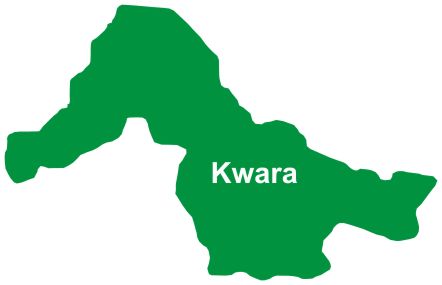
There were at least two ennobling traits in the private life of Dr. Abubakar Olusola Saraki (1933-2012) that public figures today can imbibe to strengthen their homes and enrich the polity: religious tolerance and compassion.
Dr. Saraki, a devout Muslim and an iconic figure in Kwara, married a Christian, Florence Morenike, in 1962, according to an interview he granted Tell magazine in March 2011.
Kwara is a cultural mishmash, though being the southernmost outpost of old Sokoto Caliphate, has in Ilorin an Emirate, which links the local ruling theocracy right back to the ancestral capital of Usman Dan Fodio. As a symbol of power, therefore, Islam looms large; and its adherence or non-adherence may make or ruin many an aspiration to political leadership, even if the Nigerian state is officially secular.
That Dr. Saraki practised his faith but left his wife to practice hers, so much so that between 1962 and his death in 2012, Mrs Saraki added to her name, another prefix of "Deaconess", is a salute to religious tolerance that chides Nigerian Christian and Muslim fundamentalists in these troubled times. It simply shows that beyond the hot ardour of doctrine, God is one and the same.
Then, compassion. Ripples' first consciousness of Dr. Saraki, as a secondary school boy in the 1970s, was of a young medic who would die first, rather than turn his back on the less fortunate that needed help.
So, when the man the Nigerian media would later dub the "Strongman of Kwara Politics" came onto his own, at the end of that decade and beginning of the Second Republic (1979-1983), Ripples knew his risen Kwara profile was just desert for years of compassionate investment, even if Ripples did not particularly care for Dr. Saraki's peculiar politics of democratic feudalism, with all its telling oxymoron.
So, when the Awoist Unity Party of Nigeria (UPN) apparatchiks, with their famous four-cardinal programmes of free education, free health, mass shelter and integrated rural development were sneering at Saraki's reported "feudal" opportunism, it was clear again it was empty gas driven by plain partisan envy.
Saraki's genuine compassion for the Kwara masses, long before any partisan kill could be made, was real. Saraki had planted slow and long. For him, it was political harvest time.
But while these two fine traits laid the foundation for the Saraki ascendancy, his bid at democratic hegemony was clear - for in Saraki's feudal political view loomed the rather undemocratic ethos that if a royal does not die, another does not bid for the throne.
But unlike the rather incongruous but not unusual tenet of democratic royalty (with the likes of the Kennedys, the Bushes and to some extent, the Clintons in the United States), which throws up different figures from the same family over the ages to bid for the democratic throne (ah, another violent oxymoron!), the late Saraki was the Alpha and Omega of his own feudal universe. The Oloye was yesterday. The Oloye is today. And the Oloye would ever shall be, mortality or no!
In such a paradise and hell of total domination (paradise for the Oloye, hell for his political rivals), the Ilorin democratic rabble, who the Oloye loved so dearly and who in return doted on their benefactor so completely, became at most times democratic zombies to be periodically pressed into devastating service to maintain the Oloye electoral mystique. Saraki's opponents sneered this rabble was gorged silly on subversive generosity. But it was clear Saraki had trumped his political foes in real-politik.
Still, if the Kwara masses had by and large been pacified, the elite never were so. That shaped the way for a Saraki-Kwara elite war of attrition, a war which Dr. Saraki won by and by, until he ran into the ambush of his own son, Bukola, ironically a beloved firstborn and another medic.
While French Emperor, the great Napoleon Bonaparte met his waterloo in today's Belgium, the great Oloye met his in the intimate mess of sibling political civil war, with the wise patriarch backing the clear wrong horse - or more appropriately, the wrong mare!
How was Saraki supposed to triumph in that high-stake battle? He pulled his troops from the ruling state and federal party, the Peoples Democratic Party (PDP) for a new and unknown quantity, the Allied Congress Party of Nigeria (ACPN), faced the full wrath of combined state and national incumbency and threw up a woman, though darling daughter, Gbemisola, who the Oloye would willy-nilly install in a Kwara of conservative political temper and unfazed religious chauvinism. Besides, the Ilorin elite waited with bated breath for the Saraki denouement - and all the sweeter because the Saraki were cleaning themselves out!
With all these odds, the old man still expected, at the roar of Baba Oloye, all these walls of Jericho would fall? Hubris never came in starker and more tantalising form!
Now, all the old political friends turned fiends - Adamu Attah, Sha'aba Lafiagi, Mohammed Alabi Lawal, Salmon Adebayo, the senatorial surrogate who outsmarted Saraki but disappeared into oblivion after serving out a four-year term, et al - must have flit through the Oloye's mind, as he faced the first major defeat of his political career and his eventual demystification.
So, who carries the gospel of Saraki's democratic feudalism to the next generation - Saraki the Son, Bukola, who vanquished his old man and seized the empire, even if he insists no regicide had taken place? Hardly!
Hardly, because the political demographics have changed. The West Central State of 1967 is a different ball game from the Kwara of 2012. Besides, Saraki did not leave behind a comprehensive canon of work, ala Obafemi Awolowo, to articulate his vision and emblazon his philosophy - maybe he didn't have one?
And of course, because of the paternalistic megalomania of the late Saraki's politics, he boasts no boisterous and winning disciples, ala Awoists, save, of course, Saraki the Son, albeit in a bitter-sweet form. How can Bukola politically slay his father and yet claim to continue with his legacy?
It would therefore appear the passage of Baba Oloye has thrown the Kwara political firmament wide open. Kwara may be the southernmost horn of the old Sokoto Caliphate. But it is also the northernmost rim of the old Oyo Empire. So, it could well be a new and fierce ideological battle ground between the regnant Northern conservatism and looming South West's social democracy.
By the way, it would have been interesting what would have become of Kwara politics, had the Second Republic not aborted, and had three-month governor, Cornelius Adebayo, completed his term on UPN mandate.
Whatever happens however, dogma would not win the next war. But earning the trust and reverence of the Kwara masses would. That is the abiding legacy of Baba Oloye, as Saraki the Son and his political foes lunge for the soul of Kwara, in the post-Saraki era.
Cloud Tag: What's trending
Click on a word/phrase to read more about it.
Toyin Sanusi Lithium Ibraheem Adeola Katibi Harmony Holdings Ilorin Metro Park Wahab Egbewole Saad Omo Iya National Party Of Nigeria Oyawoye Aminat Ahmed Forgo Battery Company Limited Hausa Muhammad Fawaz Abubakar Tanke Flyover Bridge Umar Saro S.O. Opowoye Ibrahim Gambari CT Ayeni Jelili Yusuf Doyin Group IESA Olatunji Moronfoye Oke-Oyi Bolakale Kawu IYA YUSUF LAK Jimoh Isin Ubandoma Of Ilorin Ronke Adeyemi Is\'haq Modibbo Kawu Justina Oha Issa Manzuma Gbemisola Oguntimehin Ahmed Dankaya GRA Oba Of Jebba Makama Jumoke Monsura Gafar Iyabo Dupe Adekeye Aisha Ahman-Pategi Muhammad Mustapha Suleiman Afonja Balogun Fulani Veterinary Teaching Hospital Ike Ekweremadu Rafiu Ibrahim Saidu Kawu Abdulbaqi Jimoh Ilorin Likeminds Foundation Rashidi Yekini Ayobami Seriki International Aviation College Tsaragi Elese Of Igbaja Folashade Omoniyi Amule IYA ALFA NLA Ajike People Support Centre Maryam A. Garuba Zara Umar AbdulHakeem Ajibola Akanbi Olumide Daniel Ibitoye Muhammadu Buhari Abdulrahman Iliasu Ita-Nmo Market AbdulGaniyu Kareem Suleiman Mora Omar Tescom.kwarastate.gov.ng Al-Hikmah Radio Mahmud Ayinla Giwa Sardauna Kuliyan Geri Shonga Farm Project Abdul Jimoh Mohammed VADA Sarafadeen Kayode Akorede Aliyu Salihu