


The Role of Traditional Institutions in Contemporary Governance by Prof Abubakar Sulaiman
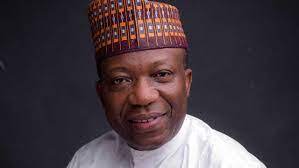
I am very delighted to be a part of the one year anniversary lecture of the 12th Balogun Alanamu Ilorin Emirate. It is not often that a revered traditional title holder will choose to celebrate the anniversary of his installation with an academic exercise that requires deep introspection. This could be attributed to the fact the present Balogun Alanamu is an intellectual with a strong academic background and has brought this to bear in his current endeavor.
I therefore congratulate the Balogun Alanamu, Dr. Usman Atolagbe Abubakar for this very thoughtful activity which signposts the intellectual rigor that will feature prominently in the discharge of your responsibilities.
As the chairman of the occasion, I find it necessary to make this remarks. On a general note, we are all aware that traditional Institutions have come full circle in Nigeria. They have moved from being the central locus of power in most societies in pre-colonial Nigeria to advisory institutions in contemporary Nigeria.
During the pre-colonial era, Traditional institutions held the reign of power in several societies in Northern and Western Nigeria. It must however be noted that societies in pre-colonial Nigeria were at different stages of development. While some had established traditional institutions, others especially in the eastern part of the country operated communal governance structures where monarchies were unknown. The governance structure in each society was directly correlated with the dominant productive forces.
Also significant to note, is that pre-colonial traditional institutions performed basically the same roles including law-making, maintenance of law and order, resolution of disputes and collection of taxes where applicable.
The advent of colonial rule and the exigencies of the time, saw the introduction of indirect rule which required the use of traditional institutions as governance structures. Under this arrangement, the powers of the traditional institutions were substantially whittled down and they became appendages of the colonial masters.
It may be important at this point to make a distinction between traditional institutions and traditional rulers. While the traditional rulers are the head and the most powerful part of the traditional institutions, the traditional institutions are far bigger than the traditional rulers. The traditional institutions perform different executive, legislative and judicial functions in the name of the traditional ruler.
Even though opinions have remained divided on the role of traditional institutions in a democratic setting, the reality is that traditional institutions remain very relevant and are actually revered in Nigerian communities to date. A case in point is the role of the Sultanate Council in providing leadership to the Muslim community in Nigeria. For us in the Ilorin Emirate also, traditional institutions and traditional rulers have remained relevant. This is as a result of their significance in the spread and continued vibrancy of Islam to date. Thus, our traditional rulers are expected to be the embodiment of moral, cultural cum Islamic values.
Some of the ways in which traditional institutions are involved in contemporary governance in Nigeria include, conflict resolution, community mobilization for development purposes and serving as a communication bridge between the Government and the people, maintenance of law and order through intelligence gathering to support the security agencies, providing advisory services to government as well as preserving and promoting the culture and tradition
At this juncture, it is important to ask ourselves how well our traditional institutions and traditional rulers have lived up to the expectation of our people particularly in Ilorin Emirate. A cursory examination of recent developments in Ilorin Emirate which has called for urgent concern is the increasing partisanship of the custodians of our key traditional institutions to the extent that an average Ilorin person can tell the political biases of our traditional rulers and our Islamic scholars.
While it is not unexpected that as a political animal, our fathers may have their preferences, but the office they occupy demand of them to be highly circumspect and ensure a semblance of neutrality in their dealings as their subjects belong to different political parties.
Arising from the above, one can cite some infractions in the handling of some of the key cultural/Islamic activities in the Emirate in recent years. By this, I am referring to aspects of the implementation of the Durbar, management and occurrences at Eid praying ground and even the prestigious annual IDPU calendar launching to mention a few. My observation is that we have allowed political differences among the elite of the Emirate to rub negatively on the way these activities are handled.
At the time of elections, I have also noticed that our traditional and religious leaders openly support and campaign for one party against the others. This does not augur well for the credibility of the traditional institutions because they become vulnerable to political retributions, blackmail and manipulation.
My concern in all of these, is that except our fathers moderate their conduct and remain as the father to all their subjects, there is a likelihood of them losing their prestige and institutional credibility. The inherent danger is that not only will the consequences of their partisanship affect their personality, there is also the tendency that the traditional institutions and the values they embody will be negatively.
On the way forward, I wish to suggest that in line with the demand and requirements of the present time, the selection process for the occupants of our traditional institutions should be rigorous such that the best among the contestants are the ones chosen. Our present Balogun Alanamu for instance personifies this call. He is not only qualified because he a scion of the ruling house, his academic and professional credentials also position him to understand the developmental dynamics of the society and attract local and international reverence to the institution that he represents.
Secondly, it is imperative that our traditional rulers surround themselves with capable Advisers and Aides. More often than not, leaders are misled by misinformation and bad advice of the people they rely on.
Thirdly, it is important to evolve innovative financing models that insulate traditional institutions from pressures and blackmail from political office holders.
Fourthly, all stakeholders should be involved in creating a more secure tenure for traditional institutions that makes it more difficult for political office holders to sanction or dethrone them. The traditional institutions need to have non-political mechanisms for taking corrective or remedial actions.
The power and authority of traditional institutions need to derive from the people they serve rather than political office holders.
Finally, I want to once again congratulate our revered Balogun Alanamu, Dr. Usman Atolagbe Abubakar for this first-year anniversary celebrations. I have no doubt in my mind that you will continue to provide high quality leadership to your subjects and that the institution you lead will be a shining example of the continued relevance of traditional institutions in a democracy and indeed in the digital age. I wish you many blessed and prosperous decades ahead. May your reign be long and may the Almighty Allah guide you to the right path, the path of success and the path of those upon whom He has bestowed abundance of His favours.
PROFESSOR ABUBAKAR SULAIMAN
DIRECTOR GENERAL, NATIONAL INSTITUTE OF LEGISLATIVE AND DEMOCRATIC STUDIES (NILDS) MADE THIS REMARKS AT ONE YEAR ANNIVERSARY LECTURE OF THE 12TH BALOGUN ALANAMU ILORIN EMIRATE
Saturday, 6th May 2023
Cloud Tag: What's trending
Click on a word/phrase to read more about it.
Lithium Deposit Florence Saraki Ilorin Anchor Men And Women Sunday Fagbemi Aliyu Sabi National Broadcasting Commission Sa\'adu Salahu TIIDELab Dele Belgore Air Peace Wahab Isa International Vocational Centre Abiodun Musa Aibinu Yahaya Abdulkareem Babaita Minister Saka Saadu Garba Ado Sanni Afolabi-Oshatimehin NNPP Yahaya Seriki Federal College Of Education (Special), Afon Idris Garuba Aliyu Umar Orisa Bridge Oro Grammar School Bond Sunday Otokiti Pius Abioje Shettima Of Ilorin Clement Yomi Adeboye Apado Grillo Alaaya Taofeek Sanusi Idofin Clara Nwachukwu Kayode Ishola Isiaka Gold Abdul-Rahoof Bello Irepodun Ajibola Saliu Ajia Bukola Ajikobi Principal Private Secretary Yusuf Arowosaye Kayode Ibrahim Tuesday Assayomo Kudirat Arinola Lawal Idris Amosa Oladipo Saidu Kawu Magaji Are Akorede Fatai Garuba Labaka Chikanda Taofik Mustapha AbdulHakeem Ajibola Akanbi Kwara State Health Insurance Agency Niyi Ogundiran Hassan Abdulazeez Elewu Hydroelectric Power Producing Areas Development Commission IF-K Omoniyi M. Ayinla Balogun Gambari Rotimi Samuel Olujide Mary Arinde AbdulGaniyu Kareem Kwara 2023 Mohammed Abduraheem Age AbdulKareem Dauda Adeniran Adeshola Folashade Omoniyi Durbar Festival Tunji Arosanyin NURTW Abubakar Atiku Ibrahim Gambari Abdulrazaq Akorede Ahmed Ayinla Jimoh