


Institutionalise Equity-Sensitive Governance Mechanisms, Aremu Urges Stakeholders
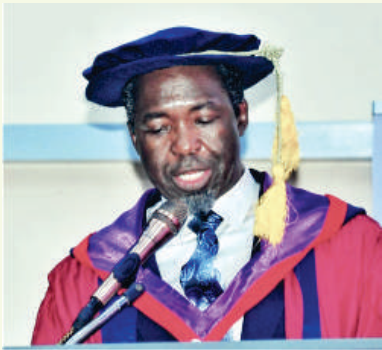
A former Ag. Head of the Department of Political Science, University of Ilorin, Prof. Fatai Ayinde Aremu, has urged policy makers to ensure the institutionalisation of equity-sensitive governance mechanisms across all the layers of governance in Nigeria.
Prof. Aremu stated this last Thursday (May 21, 2026) while delivering the 302nd Inaugural Lecture of the University, titled "Equality As Illusion: Asymmetrical Dimensions of Politics And Policy in a Competitive World", at the University Auditorium.
The don explained that it was high time institutions embedded corrective mechanisms that level the playing field through targeted interventions for marginalised groups.
Prof. Aremu stated that there is also the need to enforce the requirements that grant specific quota in government institutions for women, persons with disability, refugees and internally-displaced persons with respect to opportunities that would improve their livelihood.
He also called for the reframing of policy design around realism of power, saying that insistence on formal equality can never be enough.
Governments, according to the Inaugural Lecturer, must move beyond the illusion of equal actors and design policies that explicitly recognise asymmetries in capacity, access, and influence.
He added that policy frameworks should incorporate power mapping by explicitly identifying who benefits, who is excluded, and who shapes outcomes, before implementation. This, according to him, could be done by incorporating in policy documents considerations for equality that acknowledges the reality of how the policy could shape and be shaped by embedded asymmetries.
He also stated that Ministries, Departments and Agencies as well as other government institutions must be required to conduct Equality Concern Audits on their respective policies and programmes as a starting point.
He also called for the strengthening of strategic state capacity. He explained that In asymmetrical environments, weak states are not simply operating from positions of disadvantage; they are often structurally constrained by limited institutional capacity, economic dependence, technological deficits, and unequal bargaining power.
Prof. Aremu, who had served at the National Institute for Policy and Strategic Studies, Kuru, Jos, said that the pathway to meaningful autonomy and competitiveness lies in the deliberate construction of a capable, strategic, and developmental state.
He said that the recommendation becomes actionable when translated into concrete governance, economic, and institutional reforms as he said that Nigerian government must prioritise merit-based public service recruitment, continuous policy training, data-driven governance, and professionalised bureaucracies capable of long-term strategic planning.
He said that this should be supported with strategic investment in agriculture, manufacturing, technology, creative industries and local value chains in order to reduce dependency and enhance economic resilience.
Prof. Aremu also encouraged the pursuit of what he called "smart diplomacy". While saying that the days of passive alignment were gone, he noted that States in the Global South cannot effectively navigate an asymmetrical international system through isolated or reactive diplomacy.
Prof. Aremu explained that in a world where power is unevenly distributed, strategic and interest-driven diplomacy becomes essential for protecting national interests, expanding bargaining power, and reducing structural vulnerabilities.
He, therefore, said that Nigeria should continue to actively engage and utilise regional blocs and continental platforms such as the African Union (AU), the Economic Community of West African States (ECOWAS), and similar regional mechanisms.
He also urged other countries in the Global South to continue to deepen South-South cooperation by expanding collaboration in education, technology, agriculture, health, and innovation with countries facing similar developmental realities.
Prof. Aremu added that partnerships among African, Asian, Latin American, and Middle Eastern countries can reduce excessive dependence on traditional Western donors and institutions.
He equally called for the renegotiation of global engagements through an asymmetry lens. He said that in an asymmetrical and highly competitive world, trade agreements, development partnerships, and security alliances often carry hidden costs that can deepen vulnerable dependence, weaken domestic industries, constrain policy autonomy, and reinforce external influence over national priorities.
In order to address this problem, Prof. Aremu said that Nigeria and other weaker states needed to invest in strategic diplomatic capacity and negotiation expertise as he pointed out that in many international negotiations, weaker states are disadvantaged not only by limited resources but also by technical gaps.
Governments, according to him, should, therefore, train specialised diplomats, trade negotiators, and policy experts capable of navigating complex issues such as climate finance, digital governance, Artificial Intelligence regulation, global taxation, and international trade law.
Additionally, Prof. Aremu encouraged states to prioritise reciprocity and value addition in trade relations. He said that many developing countries continue to export raw materials while importing finished goods, perpetuating unequal exchange relationships.
To reduce this tendency, he said that governments should negotiate agreements that support local manufacturing, technology transfer, and industrial upgrading. This, according to him, includes insisting on local content provisions, skills transfer programmes, joint ventures, and investment in domestic supply chains rather than allowing extractive economic relationships to persist.
He also called for the deconstruction of dominant theories and rebuild context-sensitive frameworks. He said that African scholars cannot meaningfully explain African realities using frameworks that were developed in vastly different historical, institutional, and socio-economic contexts without first interrogating their assumptions.
The Inaugural Lecture, which was presided-over by the Vice Chancellor, Prof. Wahab Olasupo Egbewole, SAN, was also attended by Principal Officers, friends, students, colleagues and relations of Prof. Aremu from far and near.
Cloud Tag: What's trending
Click on a word/phrase to read more about it.
PAACO-PCL Consortium Leke Ogungbe Dunmade Adam Abdullahi Al-Ilory Mohammed Katsina Ahmed Yinka Aluko Ayodele Shittu Rihanat Ajia Yakubu Shaaba Saadatu Modibbo-Kawu PharmAccess Foundation Abdulfatai Baakini Prince Sunday Fagbemi 11th Galadima Muhammed Abdullahi Saudat Abdulbaqi Ojo Fadumila Olanrewju Okanlawon Musa Minister Aliyu Muyideen Abdullahi Imam Abdullahi Gwanara Ibrahim Oloriegbe Ayodele Kuburat Olaosebikan Sheikh Ariyibi Abdulmutalib Shittu Assayomo Chemiroy Nigeria Limited Ubandawaki Mogaji Aare Ilesha-Baruba Bio Ibrahim Isiaka Yusuf Ilorin West Savannah Centre For Diplomacy, Democracy And Development Bamidele Adegoke Binta Abubakar Mora General Hospital, Offa Tunji Folami Abubakar Abdullahi Bata Government High School (GHS), Adeta Saad Omo Iya Danhawa KW-GIS Fatimat Saliu Kayode Ibrahim Mohammed Yisa Yusuf Amuda Gobir Olubukola Kifayat Adedeji Benin Republic Ilorin General Hospital S.O. Opowoye Oladimeji Thompson Kumbi Titiloye Umar Adelodun Marufat Oladosu Dairo Kunle Paul Ilorin Sabitiyu Grillo CCT Playing Host Raimi Iyanda Malete New Nigeria People’s Party Abikan New Naira Notes VADA Ajike People Support Centre Temitope Ogunbanke Olosi Of Osi Women Radio Offa Metropolitan Club James Ayeni Bolaji Aladie Jide Oyinloye Muslimah Entrepreneurship Forum Yahaya A Paniyaro