


Unilorin Researchers Warn of Metallic Contamination from Cast-Iron Grinding Discs
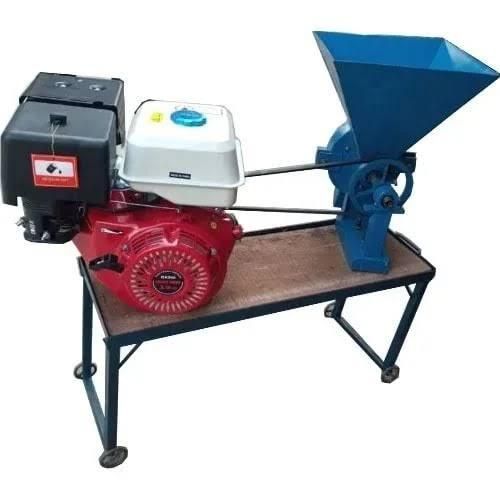
Researchers at the University of Ilorin (Unilorin), Kwara State, have warned that particles released from cast-iron grinding discs during milling could enter commonly consumed food and pose long-term health risks.
The researchers found that up to 1.7 grammes of metallic contaminants could be introduced into 10 kilogrammes of ground maize during dry grinding operations, according to a statement by Mr Kunle Akogun, Director of Corporate Affairs, University of Ilorin, where 10 scholars undertook the research project.
The research, which pointed out the inherent danger of metal contamination of foods processed by grinding machines at public mills, was funded by the Tertiary Education Trust Fund (TETFund) under the National Research Fund.
The research project is titled: "Documented contamination levels, sources and health risks associated with metallic wear from cast-iron grinding discs commonly used across Nigeria and other developing nations".
Akogun said that the team comprises the Principal Investigator, Prof. Sulaiman Abdulkareem of the Department of Mechanical Engineering, Prof. Ismaila Idowu Ahmed, Prof. Jamiu Kolawole Odusote and Prof. Rasheedat Modupe Mahamood.
Others include Dr Jeleel Adekunle Adebisi, Dr Segun Isaac Talabi, and Mr Taiwo Yahaya from the Department of Materials and Metallurgical Engineering.
Also on the team were Prof. Lawrence Aderemi Olatunji of the Department of Physiology and Dr Mariam Kehinde Sulaiman of the Department of Medical Microbiology & Parasitology, who contributed medical and biological expertise to the investigation.
Prof. Jamiu Adetayo Adeniran of the Department of Chemical Engineering was later invited to join the team, contributing environmental source apportionment and health-risk modelling expertise.
Akogun quoted Prof. Abdulkareem as saying that the findings highlighted the need for improved milling practices and stronger quality-control standards for grinding discs used in food processing.
"The average contaminant particle size was approximately 43 micrometres, making the particles small enough to pass into the stomach unnoticed," the team lead said.
Prof. Abdulkareem said that it was discovered that dry grinding produced significantly higher quantities of metallic contaminants than wet grinding, with water serving as a lubricant that reduces wear during the process.
He said that the research demonstrated significant corrosion susceptibility among all the grinding discs when exposed to simulated gastric solution, a fluid matching the human stomach environment at pH 1.7 and 37°C.
"Corrosion occurred at varying degrees among the discs, with the imported sample showing the highest susceptibility, while the pit furnace-produced disc showed the most resistance," he said.
Cloud Tag: What's trending
Click on a word/phrase to read more about it.
Busari Toyin Isiaka Tafidan Kaiama Ike Ekweremadu Alapado Mustapha Akanbi Isiaka Rafiu Mope NIPOGA Ilorin Like-Minds Abubakar Baba Sheikh Alimi Osuwa Trader Moni Yoonus Kola Olatinwo Lola Ashiru Curfew Bamidele Adegoke Oladimeji Shettima Of Ilorin Abdulbaqi Jimoh Mohammed Abdulahi Taofeek Ibraheem Muhammed Abdullahi Asiwaju Bola Tinubu Razaq Atunwa Ilorin Central Mosque Ramat Oganija Goodluck Jonathan Sa\'adatu Modibbo-Kawu Sobi Specialist Hospital NSCIA CACOVID Palliatives Vasolar Consultoria Minimum Wage Shola Odetundun Shagari Idowu Aremu Razaq Ayobami Akanbi Dar-Al-Handasah Consultants Yusuf Aiyedun Sanusi Abubakar Bolaji Aladie University Road Umaru Saro Yusuf Ibitokun Sherifat Abdulwahab Olarewaju Issa Lithium Deposit V.O. Abioye Adisa Logun Omu-aran Ilorin Talaka Parapo Adolescent Girls Initiative For Learning And Empowerment Abubakar Lah Odolaye Aremu Oyedun Juliana Funke Third Estate Ethical College Aminat Omodara Borgu Akorede Amos Sayo Yakub Lai Gobir Bayo Lawal Alfa Modibo Belgore Maigida Afolabi-Oshatimehin Adenike Harriet Iyiola Oyedepo Paul Odama Funmi Salau Abdulrazaq Sanni Kola Adesina Agbarere Lukman Adeloyin LAK Jimoh Omupo Omoniyi M. Ayinla Otoge Oko Erin Standard Organization Of Nigeria