


Empowering grassroots women with women centres
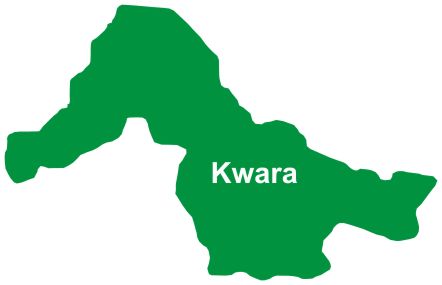
The empowerment of women is important in reducing poverty in the country especially at the grassroots level since women play a vital role in the welfare of the household as well as the community.
Thus, for women to earn income, be educated and participate in decision making within households they need to be empowered.
Women Development centres (WDCs) were set up throughout the country in the late 80's to ensure that the socio-economic enhancement and empowerment of women folk at national level is replicated at the states and local government level.
They were established for the purpose of eradicating poverty at the grassroots level through the provision of vocational and literary skills to women and to encourage them to start businesses. WDCs exist in virtually all the 774 local government area of the country and are a vital tool for women empowerment if properly used.
However, while these centres made meaningful impact on women, over the years many of them became neglected and even moribund.
Findings from surveys of Women Development Centres in Nigeria carried out by the National Centre for Women Development (NCWD) to assess their situation, and ensure optimal utilization revealed that the WDCs were grossly underutilized and seriously lacking in equipment and qualified instructors to function effectively. Some of the buildings have been converted to other uses, some are dilapidated and in dire need of renovation among others.
These findings were presented at the National Council on Women Affairs in 2004 and 2006 and the council in its resolution directed that the National Centre for Women Development, (NCWD) should help provide guidelines for the activation for the WDCs.
With the support of Japan International Cooperation Agency (JICA) the first phase of the project on reactivating women development centres was launched in January 2007 with Kano as the pilot project involving six pilot local government areas in the state.
JICA"s Chief Representative, Seki Tetsuo said the "NCWD/JICA Women Development Centre reactivation project" in Nigeria is aimed at empowering women at both the communal and household level.
He said as a result of the successes recorded from the first phase, a second phase of the project started in 2011 and will end in 2015.
He said the six benefiting states in the second phase are, Kano, Niger, Anambra, Cross river, Kaduna and Kwara. Tetsuo said the project has built the capacity of 30 women through overseas training in Japan.
Tetsuo called on government particularly those at the local government level to continue to support and fund the activation of Women Development Centres (WDCs) in their respective areas saying without it JICA's efforts will yield limited development.
Speaking on the project Mallam Sadeeq Omar, Director, Planning, Research and Statistics (PRS) said, "We believe strongly that one way by which women can be empowered and poverty reduced is achievable within the activities of the women development centre.
He said the project is building the capacity of the management and instructors at these Women Development Centres and also donating equipment to them for them to function effectively.
"Generally the project has been covering training for WDC instructors, management training for Heads of WDC, and developing graduate support scheme among others. So as to sustain the process of achieving empowerment of women and then making it possible for graduates of these centres access funds from other sources because sometimes when the women complete their programmes, the money with which to start up their desired businesses and be financially independent becomes a problem.
Omar said an adult literacy programme is also being carried out, especially in the North to aid married women who have had no formal education, while undergoing the skills acquisition programme in these centres adding "it also enhanced the women's interest in their children's education. Some saw the importance of education and started training their children in school."
The benefits of the project enumerated by some of the beneficiaries and management of the centres during the opening ceremony of the stakeholders meeting of the project last month range from acquisition of skills which enabled them to start business and support their families with their earnings, hygiene and the need to keep their environment clean, improved their exposure and interaction with other people and improved livelihoods, among others.
For instance a woman from Dambatta,Kano said:"I joined WDC, because I want to be self-reliant, so that I can assist my husband, I can buy things for my children.
"I would like to acquire skills of sewing, so that I can teach sewing to other women who have difficulties to join WDC.' (Woman in Gaya, Kano).
Director General of the National Centre for Women Development (NCWD) Ms Onyeka Onwenu at the meeting commended the Japan International Cooperation Agency (JICA) for helping the centre empower women at the grassroots.
She said JICA's partnership with the centre has addressed her concern on the need for the centre to empower women in rural areas, adding that when she decided to go into politics she opted for the post of a Local Government Chairman instead of other positions because the local Government area is closest to the people and reaches them more.
While thanking the organization for its efforts, she promised the centre's readiness to continue to work with them for the overall aim of empowering the women folk in the country.
She also urged participants at the meeting to understand their roles, and responsibilities of their organization for WDC activation, study the guidelines carefully , mobilize and encourage full participation of rural women to attend WDCs, and provide support to graduates of WDCs for them to start business.
The need to enhance the socio-economic and political potentials of women through skills acquisition and improvement in literacy level is not in doubt and as more women are being empowered it also translates into improved socio-economic level of most households among others.
It is assumed that as the women's condition is improved, poverty is reduced and their contributions to national development will be enhanced which will bring about the much expected sustainable development in the country.
Cloud Tag: What's trending
Click on a word/phrase to read more about it.
ITP Oke-Kura Raimi Iyanda March 18 Adewuyi Funmilayo Adam Abdullahi Al-Ilory KW-GIS Bamidele Aluko Academic Staff Union Of Universities Sheikh Ridhwanullah Hausa Oloye Oluwarotimi Boluwatife Adenike Rabiu Kwankwaso Ile Arugbo Pategi Charcoal Baba Issa Muritala Awodun John Obuh Afeyin-Olukuta New Model Police Station Lasiele Alabi Yahaya Aliyu Umar Mahmud Ayinla Giwa Third Estate KWASSIP Alfa Yahaya Road Ibrahim Bio Abubakar Abdulraheem Ganmo Power Sub-Station Maimunat Oloriegbe Shuaib Olarongbe Roheemat Hammed Ibrahim Akaje Wahab Kunle Shittu Waheed Ibrahim Twitter Olayinka Oladapo Jogunola Sarkin Malamai Yusuf Abubakar College Of Arabic And Islamic Legal Studies Balogun Gambari Federal Neuro-Psychiatric Hospital Senate Presidency Bankole Omishore Unilorin Elese Of Igbaja Abdulkareem Alabi Abdulrahman Onikijipa Baaziki Sulaiman Atunwa Offorjama Ilorin International Airport Omoniyi M. Ayinla Mamatu Abdullahi Tunde Kazeem UNILORIN Alumni Hakeem Lawal Maigida Taofeeq Olateju Yusuf Zulu-Gambari ARMTI Ladi Hassan Kannike Olaosebikan Yoonus Kola Olatinwo David Oyepinola Adedumoye Sheriff Olanrewaju Abdulkadir Akanbi-Oke Rasaq Jimoh Democracy Day Turaki Ileloke Issa Baba Arinola Fatimoh Lawal Tunji Arosanyin